• EN
  • ZH
  • ES
  • DE
  • PT
  • IT
IOT See the difference
  • EN
  • ZH
  • ES
  • DE
  • PT
  • IT
  • Discover our lenses
    • Endless AI (New)
    • Progressive solutions
      • Camber Steady Plus Progressive
      • Endless Steady Progressive
      • Essential Steady Progressive
      • Endless Drive Progressive
      • Endless Sport Progressive
      • Endless Pilot Progressive
    • Occupational solutions
      • Endless Office Occupational
    • Bifocal solutions
      • Endless Bifocal
    • Single vision solutions
      • Endless Single Vision
      • Endless Anti-fatigue Single Vision
      • Endless Drive Single Vision
    • Neochromes
      • Neochromes Experience
      • Neochromes
      • Neochromes with Camber Technology
      • Neochromes Dark
      • Instructions for Use
    • Lens comparisons
  • Technologies
    • Camber Technology
    • IOT Digital Ray Path 2 Technology
    • Steady Methodology
    • Steady Plus Methodology
  • Services
    • IOT Business Consulting
    • IOT Technical Services
    • IOT Marketing Services
    • IOT Client Hub
    • IOT Solutions
  • Blog
  • Resource Hub
  • About IOT
    • Our company
    • IOT Intelligence
      • Our innovation ecosystem
      • Our innovation methodology
      • IOT Freeform Designer
      • Intelligent technologies
    • The IOT Experience
    • Innovation as service
    • IOT Events
    • Projects and Collaborations
    • IOT Ethics and Transparency
  • Contact us
    • Contact sales
    • Careers
  • Visit light-form.com
  • Discover our lenses
    • Endless AI (New)
    • Progressive solutions
      • Camber Steady Plus Progressive
      • Endless Steady Progressive
      • Essential Steady Progressive
      • Endless Drive Progressive
      • Endless Sport Progressive
      • Endless Pilot Progressive
    • Occupational solutions
      • Endless Office Occupational
    • Bifocal solutions
      • Endless Bifocal
    • Single vision solutions
      • Endless Single Vision
      • Endless Anti-fatigue Single Vision
      • Endless Drive Single Vision
    • Neochromes
      • Neochromes Experience
      • Neochromes
      • Neochromes with Camber Technology
      • Neochromes Dark
      • Instructions for Use
    • Lens comparisons
  • Technologies
    • Camber Technology
    • IOT Digital Ray Path 2 Technology
    • Steady Methodology
    • Steady Plus Methodology
  • Services
    • IOT Business Consulting
    • IOT Technical Services
    • IOT Marketing Services
    • IOT Client Hub
    • IOT Solutions
  • Blog
  • Resource Hub
  • About IOT
    • Our company
    • IOT Intelligence
      • Our innovation ecosystem
      • Our innovation methodology
      • IOT Freeform Designer
      • Intelligent technologies
    • The IOT Experience
    • Innovation as service
    • IOT Events
    • Projects and Collaborations
    • IOT Ethics and Transparency
  • Contact us
    • Contact sales
    • Careers
  • Visit light-form.com

Back to Blog

5 Types of Lens Coatings: What Labs & ECPs Need to Know

5 Types of Lens Coatings: What Labs & ECPs Need to Know

Published 9 sept. 2025 | 8 min
Category Manufacturing
Author
Victor Mayoral Bruno
Process Engineer Manager

  • 1. Anti-reflective (AR) coatings
  • 2. Scratch-resistant protective coatings
  • 3. UV blocking coatings
  • 4. Blue light filters
  • 5. Mirror coatings
  • Common coating problems and solutions
  • 1. Adhesion failures
  • 2. Uneven curing or coating
  • 3. Optical quality issues
  • Best practices for labs applying coatings
  • Maximize coating performance with IOT
5 Types of Lens Coatings: What Labs & ECPs Need to Know

5 Types of Lens Coatings: What Labs & ECPs Need to Know

Lens coatings are not often the first topic that comes to mind when someone mentions lens design, yet they are just as important as any other aspect of the eyeglasses. These advanced thin-film technologies improve patient satisfaction, optimize visual performance, and extend lens durability. Yet, not all coatings are created equal. 

Labs and eye care professionals (ECPs) must balance material compatibility, coating process, wear resistance, and patient lifestyle when recommending or applying coatings. Because even when manufacturers apply coatings with molecular-level precision, wearers only notice a benefit when it solves their optical problems. Understanding coating fundamentals and application best practices will help ECPs prescribe better solutions and labs to avoid coating failures. 

Comprehension begins with a better understanding of the differences between various coatings. Essential lens coatings on the market today are as follows: 

1. Anti-reflective (AR) coatings

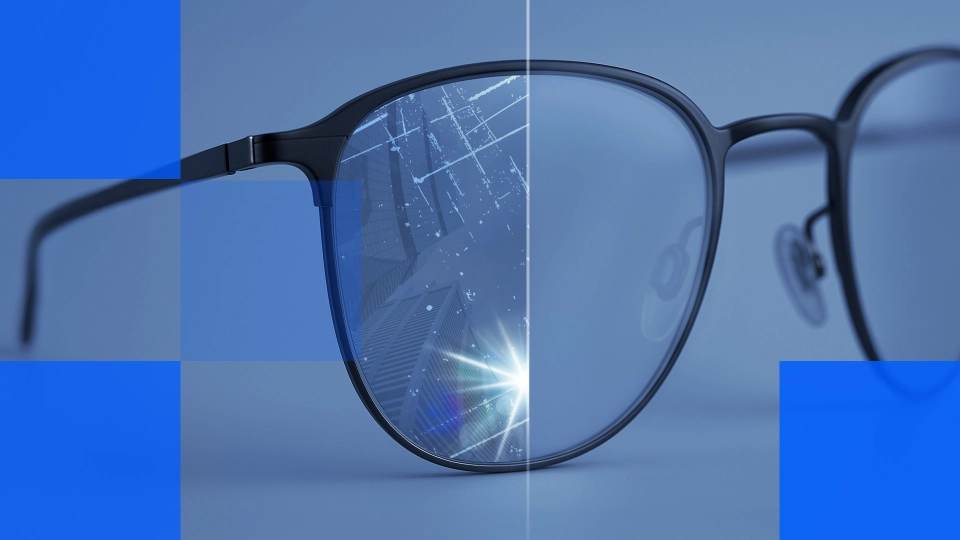
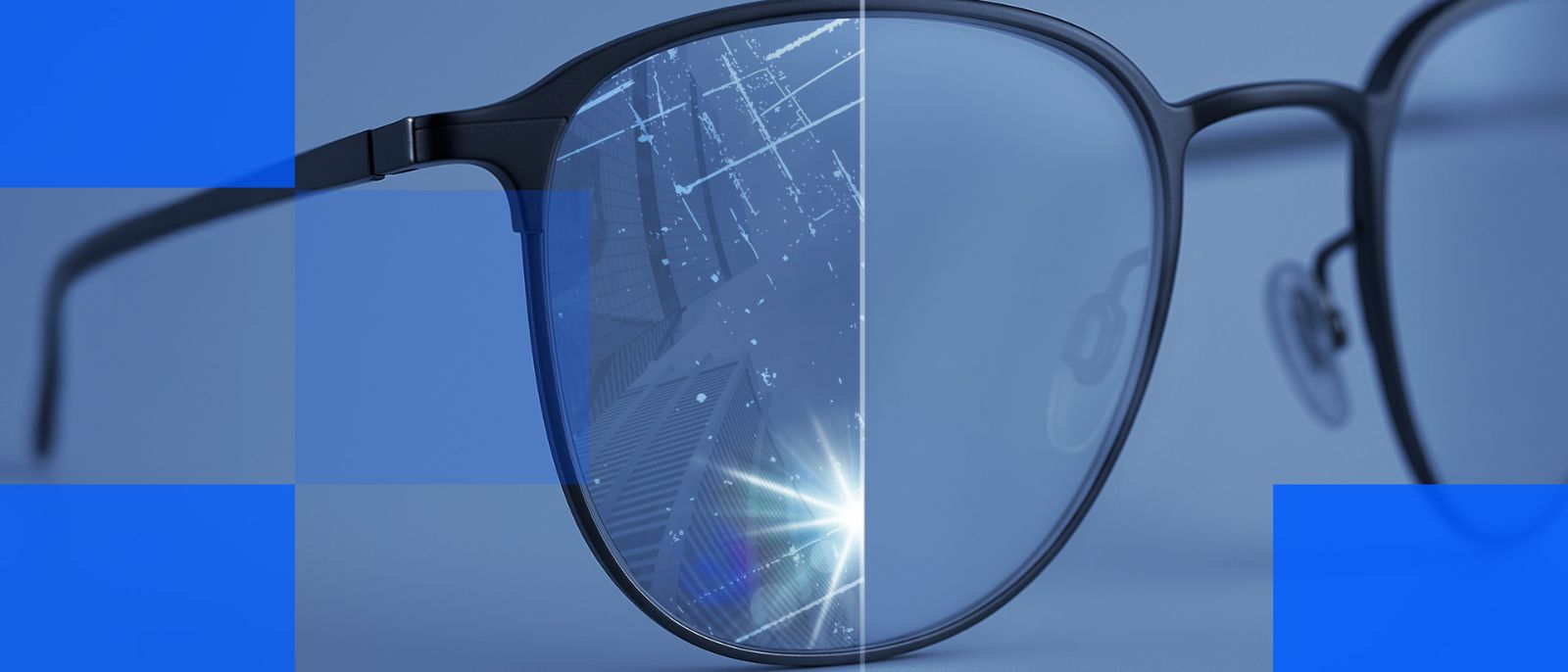
Anti-reflective (AR) coatings reduce surface reflections on the front and back of lenses. This boosts light transmission, improves night vision, reduces glare from screens or headlights, and enhances cosmetic appearance by making the lenses more transparent.

High-performance professionals, such as surgeons and pilots, benefit from premium AR systems that offer superior clarity and minimal reflections. If a patient works in an environment with airborne contaminants and frequently touches their lenses, they will benefit from the additional oleophobic treatment.

AR coating veriations

  • Standard AR coatings: Stock standard coatings use alternating layers of high and low refractive index materials. The standard AR provides reduced glare at a lower cost when compared to premium coatings. 
  • Hydrophobic/oleophobic AR: Added to the Basic AR coating, a topcoat that repels water and resists oil and fingerprints to reduce smudging. The performance difference is noticeable in challenging environments or with patients who have higher visual demands. 
  • Ion-assisted deposition AR coatings: This premium AR coating is formed through ion bombardment during deposition, creating denser, more durable films. This coating type is more expensive than standard AR, but offers greater longevity and improved optical performance. 

2. Scratch-resistant protective coatings

Hard coatings provide a protective layer that improves surface durability during everyday use and cleaning. This makes a lens more resistant to scratches, particularly when working with softer, high-index materials like 1.60, 1.67, or 1.74, which are more prone to surface damage than CR-39. Polycarbonate is also especially delicate and benefits significantly from a hard coating. While most lenses today include this layer, some low-cost CR-39 lenses are still occasionally sold without one, putting them at greater risk of cosmetic defects and reduced clarity over time.

It’s important to always match the scratch-resistant coating to the lens substrate. For example, coatings formulated for Trivex won’t perform the same on polycarbonate. Additionally, a coat needs to polymerize for the exact correct time and temperature, as under-cured hard coats create weak spots that evolve into coating failures months later. Conversely, over-curing can create surface stress that leads to cracking and also produces a yellowish effect. The index of the lacquer needs to match the lens index to avoid the Newton rings effect on the lenses.

Patients with an active lifestyle benefit from protective coatings that can withstand more stress, activity, and cleaning. 

Key points

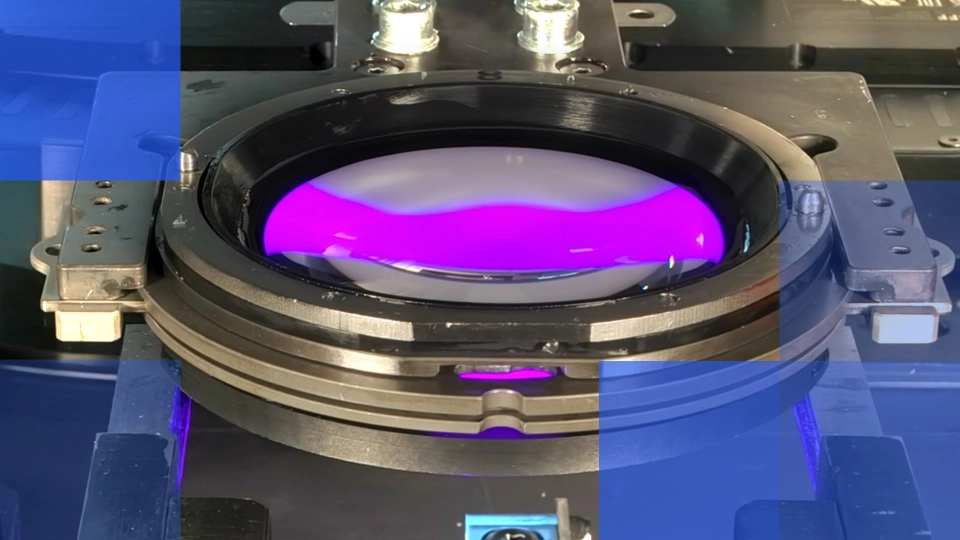
  • Thermal cure (Dip coating) vs. UV cure (Spin Coating): Thermal curing produces harder, more durable layers. UV-cured coatings offer faster processing but may be slightly less resistant to wear.
  • Dip vs. spin coating: Dip coating tends to yield more uniform results but requires cleanroom conditions. Most high volume labs use it because the dip coating machine can process and produce more lenses. However, for just one order, spin coating has a shorter processing time. 

3. UV blocking coatings

UV light-blocking coatings provide additional protection on lenses where substrate absorption may be incomplete, and they allow for UV protection in materials that don't inherently block UV radiation. This helps prevent cumulative UV damage to the eye, like cataracts, pterygium, and retinal issues. 

Often, designs combine UV coatings with photochromic lenses. These lenses provide a fast fade-to-black effect when exposed to UV light and quickly clear when UV light is removed. 

Key points

  • Interaction considerations with other coatings: The interaction between UV coatings and other coating layers can sometimes cause issues. Some UV absorbers can interfere with AR coating performance or cause premature degradation of other coating components under intense UV exposure.
  • Application: Combine UV-blocking coatings with AR to avoid back-surface UV reflection.

4. Blue light filters

Blue light filtering coatings are in higher demand as more people spend hours each day on digital devices. These filters have evolved from simple yellow tints to selective filters that target short-wavelength blue light (typically in the 400–455 nm range), which is associated with digital eye strain and potential circadian disruption. LED lights emit the higher-energy blue light at 450 nm.

There are different types of blue-blocking coatings, with some blocking a narrow slice of blue light and others maintaining a broader blocked spectrum: 

Blue light coating variations

  • Absorptive blue light filters: These filters absorb specific wavelengths of blue light by incorporating chromophores directly into the coating. Absorptive blue light lenses often have a yellow or amber tint. This coating type provides consistent filtering regardless of viewing angle, but can introduce slight color shifts to the wearer. 
  • Reflective blue light filters: These filters have a special coating on the lens surface that reflects (rather than absorbs) specific wavelengths of blue light away from your eyes. This approach has minimal color distortion to the wearer, but the lenses have slight blue reflections that are cosmetically noticeable. The filtering effectiveness also varies with viewing angle. These filters block a smaller percentage of light compared to absorptive filters. 

5. Mirror coatings

Mirror coatings reflect visible light and reduce glare in high-brightness environments, such as bright sunlight, water, and snow. The most significant difference between AR coatings is their aesthetic appearance. Mirror coatings have a highly reflective surface and are available in a variety of colors, adding a stylish and personalized touch. Lenses with a mirror coating are popular in sportswear due to their aesthetic appeal. 

Key points

  • Base preparation for coating: Mirror coatings are typically applied over a tinted or polarized base lens and must be paired with durable scratch-resistant and anti-reflective stacks underneath to protect against abrasion.
  • Colors change purpose: Different colors of a mirror coat work better in different conditions. For example, a blue mirror coat is helpful in conditions with a lot of blue light, such as on the ocean or snow. A red mirror coat is more useful on very sunny days. 

Common coating problems and solutions

Coating failures rarely occur randomly. They typically result from process deviations or environmental factors. Understanding common coating problems helps labs implement preventive measures and improve yields.

1. Adhesion failures

Adhesion failures manifest as coating peeling or flaking and typically result from improper surface preparation or contamination. Even minor residue on the lens can disrupt coating bonds. Common causes include insufficient cleaning, poor surface etching, both in HC (hard coat) and/or AR (anti-reflective), residual polishing compounds, or inconsistencies in plasma treatment. 

Solution: Labs should implement rigorous cleaning protocols and regular maintenance of the plasma system, AR machines, and HC machines.  

2. Uneven curing or coating

Variability in spin speed, cure temperature, or dipping lift-out speed can result in patchy coatings. An uneven coating layer leaves weak spots if unprotected or areas more likely to crack if the coating is too thick. This results in less durability and premature wear. 

Solution: Check regularly solid contents of the lacquers, lift-out speed, viscosity, etc. Utilize precision-calibrated machinery and conduct regular quality control tests (e.g., Bayer tests) to ensure optimal performance.

3. Optical quality issues

Haze, color variation, or reflection anomalies often stem from deposition parameter variations. Chamber contamination, target degradation, or gas flow inconsistencies can create these problems. 

Solution: Regular maintenance schedules and process monitoring help prevent degradation in optical quality.

Best practices for labs applying coatings

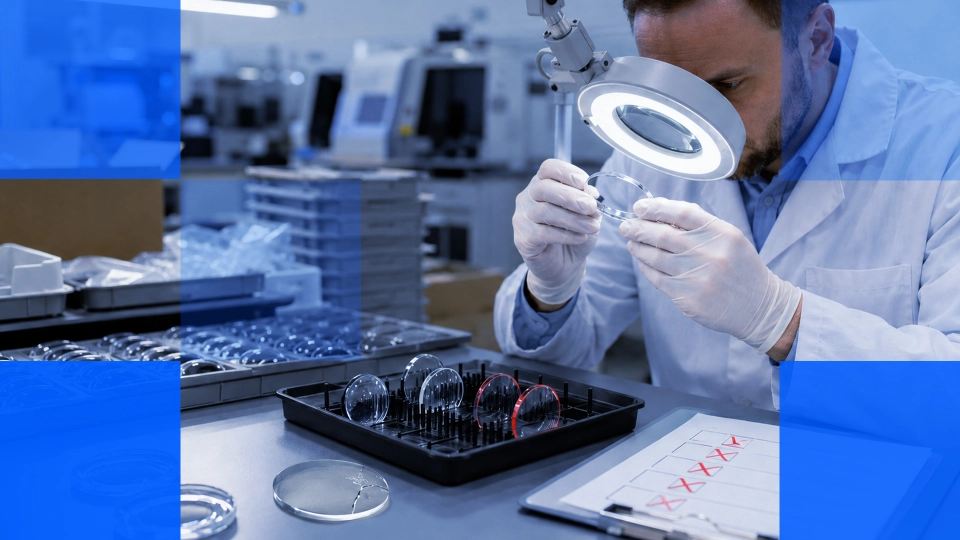
Following strict application protocols and maintaining exacting machine standards is the foundation of high-yield, defect-free coating processes. Labs that consistently achieve premium results typically excel in these areas:

1. Environment & cleanroom control

  • Maintain ISO-certified cleanroom standards with controlled temperature and humidity to prevent static buildup and dust attraction.
  • Use positive air pressure systems to keep contaminants out, with HEPA-filtered airflow across critical coating zones.
  • Enforce full gowning procedures (hairnets, gloves, shoe covers, anti-static clothing, etc) to minimize particle introduction.
  • Regularly audit airflow patterns, particle counts, and cleanroom integrity.

2. Lens preparation & handling

  • Implement multi-stage ultrasonic cleaning with monitored detergent concentration and water quality (deionized water at ≤ 1 µS/cm conductivity).
  • Ensure polishing compound removal through optimized surfactant use and rinse cycles.
  • Verify complete drying before hard coat or AR application to avoid trapped moisture.
  • Use lint-free gloves and tools to handle lenses after final cleaning to prevent recontamination.

3. Coating material management

  • Store hard coat lacquers and AR materials per manufacturer specifications (temperature, light exposure, shelf life).
  • Mix or replenish coating baths only with measured, filtered additions; monitor viscosity, cooling temperature, and solid content.
  • Match lacquer index to the lens substrate index to prevent Newton rings.
  • Replace bath solutions on a preventative schedule rather than reactively to defects.

4. Process control & calibration

  • Calibrate spin speeds, lift-out rates, cure times, and cure temperatures according to the substrate and coating type.
  • In dip coating, control withdrawal (lift-out) speed to get the desired lacquer thickness and maintain uniform thickness.
  • For thermal curing, log oven temperature profiles and verify with calibrated probes; avoid temperature overshoot that can induce yellowing or surface stress.
  • Maintain vacuum chamber parameters (pressure, gas flow, cleaning conditions) for AR and mirror coatings, with real-time monitoring where possible.

5. Layer compatibility checks

  • Confirm all coating layers (hard coat, AR stack, topcoat, mirror) are designed to work together chemically and mechanically.
  • Test adhesion between each layer type in small batches before scaling to full production.

6. Preventive maintenance & quality assurance

  • Schedule regular preventive maintenance for coating lines, including pump seals, filters, bath circulation systems, and UV/thermal curing equipment.
  • Maintain detailed process logs, including lot numbers for coatings and substrates, machine settings, and operator notes.
  • Perform Bayer abrasion tests, adhesion tests, haze measurements, and spectral reflectance checks as part of in-process quality control — not just at final inspection.
  • Track defect trends to identify root causes (environmental, mechanical, or human factors) and implement corrective actions.

By implementing these controls, labs can dramatically reduce rework, extend coating life, and consistently meet premium optical performance standards.

Maximize coating performance with IOT

Superior coating performance isn’t just about equipment. It starts with smart lens design, material compatibility, and consistent process control. That’s why IOT supports labs with technologies that make coating easier, more reliable, and more customizable.

Whether you’re using Neochromes photochromic lenses or Endless Steady progressive designs, IOT’s materials provide excellent adhesion for modern coating stacks. Our lens designs and substrates are developed to support high-yield, high-performance coating applications. IOT partners benefit from:

  • Tailored coating recipes for AR stacks, blue light filters, and mirror coatings

  • Validated compatibility with hard coat, AR, and photochromic treatments for highest performance

  • Access to process control support and and standardized quality control tests in the market (e.g. Bayer abrasion testing, QUV aging, adhesion, haze and spectral reflectance checks)

Whether you’re launching a new mirror series or improving yield on AR stacks, our coating-ready lens platform and technical expertise give our partners a competitive edge in performance and reliability.

Contact us today to find out how we can optimize your coating process together.

You may also like:

  • AI-Powered Lenses Are Here: What This Means for Labs, ECPs, and Patients
  • What Are High-Index Lenses? Benefits & Considerations
  • Understanding Computer Vision Syndrome: A Guide to Choosing Lenses to Manage Digital Eye Strain

Back to Blog

About the Authors

Victor Mayoral Bruno
Process Engineer Manager

Víctor is a Process Engineer Manager at IOT Lenses, with over 20 years of experience in the optical industry. Prior to joining IOT, he led production and maintenance operations at several high-volume ophthalmic labs, including Prats and Essilor, where he managed complex automation systems and teams of up to 45 professionals. Víctor holds a degree in Industrial Engineering and an MBA, and brings deep expertise in quality control, lean manufacturing, and process improvement.

  • Linkedin
Read more

Related items

Lens Errors in Optical Labs: How to Identify & Prevent Costly Mistakes

Lens Errors in Optical Labs: How to Identify & Prevent Costly Mistakes

8 oct. 2025 | Victor Mayoral Bruno

5 Types of Lens Coatings: What Labs & ECPs Need to Know

5 Types of Lens Coatings: What Labs & ECPs Need to Know

9 sept. 2025 | Victor Mayoral Bruno

Trivex vs. Polycarbonate Lenses: Choosing the Right Material

Trivex vs. Polycarbonate Lenses: Choosing the Right Material

15 oct. 2024 | Jordi Xing

Lighter Lenses with IOT Lenticularization

Lighter Lenses with IOT Lenticularization

28 févr. 2024 | Deborah Kotob, ABOM

Helping Labs Deliver Excellent Free-Form Lenses

Helping Labs Deliver Excellent Free-Form Lenses

15 nov. 2023 | Daniel Crespo

À PROPOS DE L'IOT
  • IOT en chiffres
  • Les débuts
  • Notre ADN
  • Quatre piliers qui font la différence
  • Nos valeurs
NOUS CONTACTER
  • Contacter les ventes
  • Rejoignez-nous
IOT Intelligence
  • Notre écosystème d’innovation
  • Notre méthodologie d’innovation
  • IOT Freeform Designer
  • Des technologies intelligentes
Des services pour votre entreprise
  • Full-Service Support
  • L’expérience IOT
  • IOT Business Consulting
  • IOT Technical Consulting
  • IOT Marketing Services
  • IOT Client Hub
Ce que nous faisons
  • L’innovation comme un service
  • Nos technologies
  • Solutions de presbytie
  • Solutions de verres à simple foyer
  • Neochromes
  • Custom lenses
  • Computer lenses
  • Comparaisons des verres
  • Solutions
PRODUITS POPULAIRES
  • Neochromes with Camber
  • Camber Steady Plus Progressive
  • Endless Steady Progressive
  • Essential Steady Progressive
  • Endless Office Ocupational
  • Endless Drive Progressive
  • Endless Sport Progressive
  • Endless Single Vision
  • Endless Anti-fatigue Vision
MATÉRIAUX DE VERRES
  • Trivex
  • CR-39
  • Polycarbonate
  • Indice élevé
Our Brand Sites
  • light-form.com
  • neochromes.com
Cookie Policy Privacy Policy Legal Notice Security Policy Whistleblowing Channel ® Copyright 2021
Follow us on Linkedin Follow us on Facebook Follow us on Youtube Follow us on Instagram
Cookies

Acceptez-vous nos cookies et nos politiques de confidentialité ?

Votre vie privée est importante pour nous. Par conséquent, nous vous informons que nous utilisons nos propres cookies et ceux de tiers pour effectuer une analyse de l'utilisation et de la mesure de notre site Web afin de personnaliser le contenu, ainsi que de fournir des fonctionnalités aux réseaux sociaux ou d'analyser notre trafic. Pour continuer acceptez ou modifiez la configuration de nos cookies.

Reject Configurer Accepter
Cookies Policy
  • Your privacy
  • Strictly necessary cookies
  • Preference or customization cookies
  • Analysis or measurement cookies
  • Cookies Policy

Your privacy is important to us

Cookies are very small text files that are stored on your computer when you visit a website. We use cookies for a variety of purposes and to enhance your online experience on our website (for example, to remember your account login details).

You can change your preferences and decline certain types of cookies to be stored on your computer while browsing our website. You can also remove any cookies already stored on your computer, but keep in mind that deleting cookies may prevent you from using parts of our website.

Strictly necessary cookies

These cookies are essential to provide you with services available through our website and to enable you to use certain features of our website.

Without these cookies, we cannot provide you certain services on our website.

Preference or customization cookies

These cookies are used to provide you with a more personalized experience on our website and to remember choices you make when you use our website.

For example, we may use functionality cookies to remember your language preferences or remember your login details.

Analysis or measurement cookies

These cookies are used to collect information to analyze the traffic to our website and how visitors are using our website.

For example, these cookies may track things such as how long you spend on the website or the pages you visit which helps us to understand how we can improve our website site for you.

The information collected through these analysis or measurement cookies do not identify any individual visitor.

Cookies Policy

This cookie notice provides information about the types of cookies INDIZEN OPTICAL TECHNOLOGIES SL uses and why we use them. Your access to, and use of, the Site http://www.iotlenses.com. We inform you about our cookies Policy.


WEBSITE OWNER

Thank you for accessing the Site http://www.iotlenses.com which is owned and operated by:

Website Owner: INDIZEN OPTICAL TECHNOLOGIES SL - CIF B84465921- IOT
Postal Address: C/Suero de Quiñones 34-36. 28002, Madrid (Madrid), España
Contact: Phone: 91 833 3786 - Email: proteccion_datos@iot.es
Activity: Innovation in lenses


WHAT ARE COOKIES?

Cookies are small files that web pages, online stores, intranets, online platforms or similar, store in the browser of the user who visits them and are necessary to provide innumerable advantages to web browsing in the provision of interactive services.

The following information on the possible types of cookies helps to better understand the functions they make possible:

  • Session cookies: these are temporary cookies that remain in the cookie space of your computer until you close the browser, so that none is recorded on the user's disk. The information obtained through these cookies serves to enable operational management with each of the users who are simultaneously accessing the web.
  • Persistent cookies: these are cookies that remain stored in the cookie space of your computer once the browser is closed, and that you will consult this web page again the next time you access it to remember information that facilitates navigation (directly access the service without need to do the login process) or the provision of a commercial service (offer those products or services related to previous visits).

The cookies exchanged when browsing a web page can be:

  • First-party or own cookies: these are cookies generated by the website that is being visited.
  • Third-party cookies: these are cookies that are received when browsing that web page, but that have been generated by a third service that is hosted on it. An example may be the cookie used by an advertisement or advertising banner found on the web page we visit. Another may be the cookie used by a visitor counter hired by the website we visit.

Cookies can be used to:

  • Technical purposes: they are also called "strictly necessary". They allow the user to navigate through a web page, platform or application and use the different options or services that exist in it, such as, for example, controlling traffic and data communication, identifying the session, access parts of restricted access, remember the elements that make up an order, carry out the process of purchasing an order, make the request for registration or participation in an event, use security elements while browsing, store content for the dissemination of videos or sound or share content through social networks .
  • Personalization: they make it possible for each user to configure aspects such as the language in which they want to view the web page, display formats, etc.
  • Analysis or performance: they allow us to measure the number of visits and navigation criteria of different areas of the web, application or platform and allow us to elaborate navigation profiles of the users of said sites, applications and platforms, in order to introduce improvements based on the analysis of the use data collected by users of the service.
  • Advertising: they allow the implementation of efficiency parameters in the advertising offered on the web pages.
  • Behavioral advertising: they allow the implementation of efficiency parameters in the advertising offered on the web pages, based on information about the behavior of the users obtained through the continuous observation of their browsing  habits, which allows the development of a specific profile. {co to display advertising based on it.


WHICH COOKIES DO WE USE?

ANALYTICS COOKIES - Google Tag Manager

Description:
These allow us to recognize and count the number of users of our Sites and understand how such users navigate through our Sites.  

Use:

  • We use Google Analytics, and you can see below for how to control the use of cookies by Google Analytics.
  • This helps to improve how our Sites works, for example, by ensuring that users can find what they are looking for easily.

ANALYTICS COOKIES - Hubspot

Description: HubSpot cookies are used to track visitors and understand their behavior on our Sites. This helps us to better engage with our users and improve their experience.

Use: We use HubSpot to analyze user interactions with our Sites and to optimize our marketing efforts. HubSpot cookies allow us to:

  • Track visitor activity and behavior on our Sites.
  • Identify repeat visitors and their preferences.
  • Enhance the user experience by providing personalized content.
  • Measure the effectiveness of our marketing campaigns.

SOCIAL NETWORK

Description:
Social network cookies to register are used to link the web profile in the aforementioned social network. 

Use:

  • You can use this button to redirect to the profile of your account IOT on LinkedIn, YouTube, Instagram and Facebook.


THIRD PARTY COOKIE

Additionally, IOT has a presence in portals and third-party services for which, if you want to know the privacy conditions and use of cookies, you should consult the policies provided by them:

  • Facebook: https://facebook.com/help/cookies
  • Linkedin: http://www.linkedin.com/legal/privacy-policy
  • Instagram: https://www.facebook.com/policies/cookies/
  • Youtube: https://www.google.es/intl/es/policies/technologies/cookies/


ACCEPT COOKIE POLICY

IOT offers information about its Cookies Policy at the bottom of the website.

With this information you can carry out the following actions:

  • Accept cookies: this notice will not be displayed again when you enter the website again.
  • Reject cookies: this notice will not be displayed again when entering the website again.
  • Cookie settings: you can obtain more information about the cookies we use, read the Cookies Policy of IOT and modify the configuration to block cookies from IOT at any time. In the case of blocking cookies, the functionality of the Web may be reduced.


HOW TO DISABLE COOKIES?

Non-mandatory cookies may be disabled by adjusting the settings of the Website.

Said settings are located at the bottom of the Website. Furthermore, all browsers may be modified to disable the cookies configuration.

This is why most browsers offer the possibility to administer cookies: in order to allow for a more accurate control of privacy. Said settings may be located in the “options” or “preferences” section of the browser’s menu.

Find below links to disable cookies on each browser:

Internet Explorer (https://goo.gl/iU2wh2)

  • In the tools menu, select “Internet options”.
  • Click on the privacy tab.
  • You may configure privacy with a six-position cursor which enables you to control the cookies which will be installed: Block all cookies, High, Medium High, Medium (default level), Low and Accept all cookies.

Mozilla Firefox (http://goo.gl/QXWYmv)

  • Click the Tools menus at the top of the Firefox window.
  • Select Options.
  • Select the Privacy panel.
  • You may choose Use a customized configuration of your browsing history and other options related to your privacy.

Google Chrome (http://goo.gl/fQnkSB)

  • Click on the menu located on the toolbar.
  • Select Settings.
  • Click on Show advanced options.
  • In the “Privacy” selection, click on the Content Settings button.
  • You may configure the options in the Cookies selection.

Safari (https://support.apple.com/es-es/HT201265)

  • Select the “Preferences” option in the settings menu.
  • Open the privacy tab.
  • Select the desired option in the “block cookies” section. ()
  • Remember that you may not be able to use certain functions of the Website after disabling cookies.

If you do not wish to be tracked by cookies, Google has developed a complement which may be installed on your browser. Find it here: http://goo.gl/up4ND.


COOKIES ON MOBILE DEVICES?

The holder of the Website http://www.iotlenses.com also uses cookies and other storage means on mobile devices.

Cookies which are not mandatory to navigate this Website http://www.iotlenses.com may be disabled by entering “Set cookies on the button below to the right”.

These settings are located at the bottom of the Website http://www.iotlenses.com. Furthermore, as in the case of computer browsers, it is possible to disable or eliminate cookies by changing the options or settings in mobile device browsers.

If you wish to change the privacy options, follow the instructions of the developer of your mobile device browser. Find below a few examples of links you may use to modify privacy options on your mobile device.

  • IOS: (http://goo.gl/61xevS)
  • Windows Phone: (https://goo.gl/tKyb0y)
  • Chrome Mobile: (http://goo.gl/XJp7N)
  • Opera Mobile: (http://goo.gl/Nzr8s7)


ACCEPTANCE OF COOKIES

This Website http://www.iotlenses.com does not install cookies on the Users’ devices prior to acceptance thereof by the Users.

We hereby inform you that if you reject the installation of cookies or disable these in your browser settings, certain services may not be available to you and therefore you may not be able to gain access to certain services and/or make full use of this Website http://www.iotlenses.com.


We last changed this policy on: July 16, 2024