• EN
  • ZH
  • ES
  • DE
  • PT
  • IT
IOT See the difference
  • EN
  • ZH
  • ES
  • DE
  • PT
  • IT
  • Discover our lenses
    • Endless AI (New)
    • Progressive solutions
      • Camber Steady Plus Progressive
      • Endless Steady Progressive
      • Essential Steady Progressive
      • Endless Drive Progressive
      • Endless Sport Progressive
      • Endless Pilot Progressive
    • Occupational solutions
      • Endless Office Occupational
    • Bifocal solutions
      • Endless Bifocal
    • Single vision solutions
      • Endless Single Vision
      • Endless Anti-fatigue Single Vision
      • Endless Drive Single Vision
    • MyoLess
    • Neochromes
      • Neochromes Experience
      • Neochromes
      • Neochromes with Camber Technology
      • Neochromes Dark
      • Instructions for Use
    • Lens comparisons
  • Technologies
    • Camber Technology
    • IOT Digital Ray Path 2 Technology
    • Steady Methodology
    • Steady Plus Methodology
  • Services
    • IOT Business Consulting
    • IOT Technical Services
    • IOT Marketing Services
    • IOT Client Hub
    • IOT Solutions
  • Blog
  • Resource Hub
  • About IOT
    • Our company
    • IOT Intelligence
      • Our innovation ecosystem
      • Our innovation methodology
      • IOT Freeform Designer
      • Intelligent technologies
    • The IOT Experience
    • Innovation as service
    • IOT Events
    • Projects and Collaborations
    • IOT Ethics and Transparency
  • Contact us
    • Contact sales
    • Careers
  • Visit light-form.com
  • Discover our lenses
    • Endless AI (New)
    • Progressive solutions
      • Camber Steady Plus Progressive
      • Endless Steady Progressive
      • Essential Steady Progressive
      • Endless Drive Progressive
      • Endless Sport Progressive
      • Endless Pilot Progressive
    • Occupational solutions
      • Endless Office Occupational
    • Bifocal solutions
      • Endless Bifocal
    • Single vision solutions
      • Endless Single Vision
      • Endless Anti-fatigue Single Vision
      • Endless Drive Single Vision
    • MyoLess
    • Neochromes
      • Neochromes Experience
      • Neochromes
      • Neochromes with Camber Technology
      • Neochromes Dark
      • Instructions for Use
    • Lens comparisons
  • Technologies
    • Camber Technology
    • IOT Digital Ray Path 2 Technology
    • Steady Methodology
    • Steady Plus Methodology
  • Services
    • IOT Business Consulting
    • IOT Technical Services
    • IOT Marketing Services
    • IOT Client Hub
    • IOT Solutions
  • Blog
  • Resource Hub
  • About IOT
    • Our company
    • IOT Intelligence
      • Our innovation ecosystem
      • Our innovation methodology
      • IOT Freeform Designer
      • Intelligent technologies
    • The IOT Experience
    • Innovation as service
    • IOT Events
    • Projects and Collaborations
    • IOT Ethics and Transparency
  • Contact us
    • Contact sales
    • Careers
  • Visit light-form.com

Back to Blog

What Are High-Index Lenses? Benefits & Considerations

What Are High-Index Lenses? Benefits & Considerations

Published 30 avr. 2025 | 8 min
Category Lenses
Author
Mary Honeycutt
Mary Honeycutt
Process Engineer Manager

  • What are high-index lenses?
  • What is the refractive index?
  • Abbe value and dispersion
  • High-index lens material
  • 1.60 index
  • 1.67 index
  • 1.74 index
  • 1.90 index
  • Prescription strength for high-index lenses
  • Additional prescription considerations
  • Benefits of high-index lenses
  • Considerations of high-index lenses
  • When to recommend high-index lenses
  • 1. Prescription power
  • 2. Frame and aesthetic considerations
  • 3. Patient lifestyle factors
  • Pioneering custom high-index lens designs
What Are High-Index Lenses? Benefits & Considerations

What Are High-Index Lenses? Benefits & Considerations

Traditional lenses can become bulky and cumbersome as prescription strength increases, especially for higher levels of hyperopia or myopia. Not only do many patients consider thicker lenses less aesthetically appealing, but they can also cause discomfort for patients who wear them all day. High-index lenses provide a solution: by using materials with a higher refractive index, the lens can bend light more efficiently, requiring less physical material to achieve the needed corrective power. This results in thinner, lighter, and more visually appealing lenses—attributes that stand out in a competitive marketplace.

What are high-index lenses?

High-index lenses are specialized optical lenses manufactured from materials that create thinner, lighter lenses while maintaining optical performance. They are usually used for patients with higher prescription strengths and refractive indexes (typically 1.6 and higher) to help reduce the bulky appearance of standard lenses at this strength.

The principle behind high-index lenses lies in their molecular structure. Traditional lens materials require greater thickness to achieve the necessary curvature for vision correction. In contrast, high-index materials feature a denser molecular arrangement that allows the lens to bend light more efficiently in a lens with reduced volume. Lenses with a higher index can accomplish the same level of refraction with less material thickness than a standard lens.

What is the refractive index?

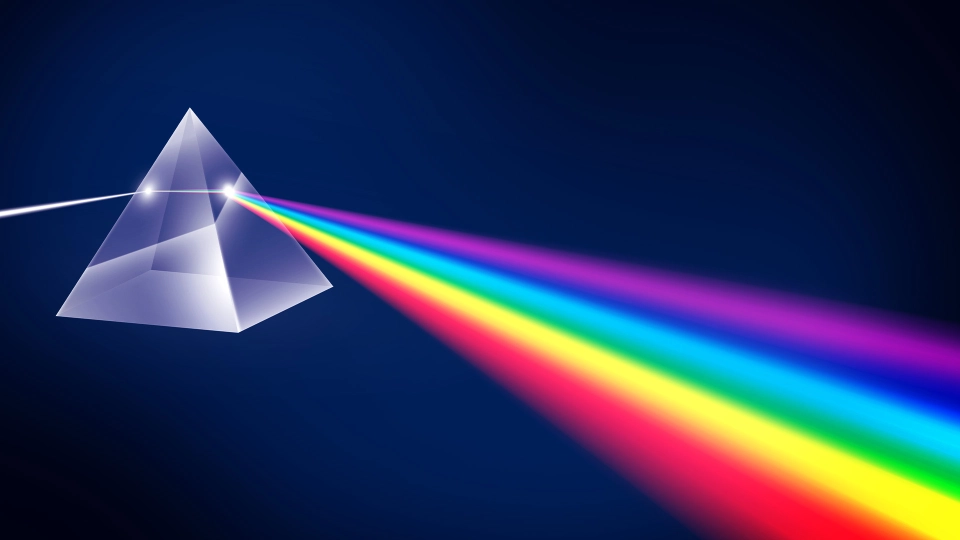
The refractive index is a number that describes how fast light travels through a given material compared to a vacuum. The refractive index indicates how much light bends when it enters a new material. A higher refractive index means light moves more slowly and bends more sharply, which allows lenses to be thinner while still providing the same vision correction. In other words, the higher the refractive index, the less material is needed to achieve the desired prescription strength.

For example:

  • A standard 1.50 lens might need a center thickness of around 3 mm for a given prescription.
  • A 1.67 lens only needs 2 mm of material (or less) to achieve the same focusing power.

Abbe value and dispersion

Increasing a lens's refractive index to make it thinner also affects its Abbe value. The Abbe value measures how much the lens spreads out different colors of light, a process known as dispersion. When dispersion is high (meaning the Abbe value is low), it can cause color fringing, where faint colored halos appear around objects, especially near the edges of the lens.

However, lens design has improved significantly, and advanced designs, like aspheric and double aspheric surfaces, minimize this effect. These designs ensure crisp vision and comfort even at higher prescriptions.

High-index lens material

High-index lenses rely on materials that differ from standard lenses, with each option targeting a specific property or manufacturing requirement. Most high-index lenses are crafted from specialized polymers that balance refractive efficiency, durability, and comfort. Extremely high lens indexes often use ultra high-index glass. Lens index determines the chosen material’s quality:

1.60 index

As the entry point to high-index territory, 1.60 materials offer approximately a 20% reduction in thickness compared to standard CR-39 (1.50) lenses. These materials typically employ modified acrylic compositions with strategically incorporated additives to increase density. The 1.60 index balances improved cosmetics and production economics, making it suitable for mild to moderate prescriptions ranging from +3.00 to -5.75 diopters.

1.67 index

Like those at a 1.60 index, 1.67 lenses are also lightweight and comfortable for the wearer. However, materials at this index have a 30% thickness reduction compared to standard plastic. Most 1.67 lenses use specialized polycarbonate derivatives or proprietary polyurethane-based formulations. Their molecular structure contains higher concentrations of sulfur and other elements with high atomic numbers, improving the lens’ light-bending capabilities. These materials perform well in prescriptions from +4.75 to -6.75 diopters, offering substantial cosmetic and weight advantages without compromising optical performance.

1.74 index

Materials with a 1.74 index are some of the most advanced plastic-based lens materials, offering a 45% thickness reduction from standard lenses. These typically use complex co-polymers with precisely controlled molecular weight distributions. The manufacturing process for 1.74 materials requires stringent temperature control and specialized equipment, contributing to their higher production costs. These materials work for prescriptions from +5.00 to -7.00 diopters and beyond, though they may display increased chromatic aberration.

1.90 index

Ultra-high-index lenses are made from glass, as glass has a higher refractive level than plastic. Glass materials with indices of 1.90 and above often incorporate rare earth elements like lanthanum. These materials can achieve thickness reductions exceeding 60% compared to standard plastic but have impact resistance and weight trade-offs. Due to this trade-off, manufacturers reserve ultra-high index glass designs for extreme prescriptions exceeding -8.00 diopters where plastic-based alternatives would require excessive thickness.

Prescription strength for high-index lenses

High-index lenses work best when the patient’s spherical or cylindrical prescription strengths reach a point where a standard plastic lens (1.50) becomes thick or heavy. Specific thresholds are good guides for designs:

  • +1.00 to -2.75: Standard 1.50 lenses are usually sufficient for low-prescription ranges.
  • ±3.00 to ±5.75: A 1.60 or 1.67 index lens helps reduce thickness and weight while maintaining good visual quality.
  • ±6.00 and above: A 1.67 or 1.74 index lens becomes a better choice to minimize edge or center thickness.
  • Beyond ±7.00 or ±8.00: Some patients may consider 1.74 plastic or 1.90+ glass lenses.

Additional prescription considerations

While general recommendation states to use higher indices for stronger prescriptions, several additional factors are beneficial to consider when selecting appropriate high-index materials:

  • Spherical component: For negative (myopic) prescriptions, lens edge thickness increases with prescription strength. High-index materials do a great job countering this effect. For positive (hyperopic) prescriptions, high-index lenses reduce the "magnifying glass" effect by making the center thinner.
  • Cylindrical component: Astigmatism creates uneven thickness in lenses. Even moderate prescriptions with significant astigmatism of -2.00 or more often benefit from high-index materials to balance the lens profile.
  • Prism component: When prism is prescribed for eye alignment issues, it adds thickness to one side of the lens. For every diopter of prism, approximately 0.1mm of thickness is added at the prism base. High-index materials help minimize this extra bulk, keeping glasses more comfortable and attractive.
  • Frame selection interaction: Larger frames or frames that don't align with the patient's pupil distance create thicker edges. Sometimes, even a moderate prescription needs high-index lenses simply because the patient chose a large or wide frame.

Benefits of high-index lenses

Benefits of high-index lenses

High-index lenses offer advantages that extend beyond thickness reduction, providing value to both patients and eye care providers:

1. Improved aesthetics

High-index lenses allow the same or greater corrective power as standard CR-39 with less thickness. A slimmer lens avoids the “coke bottle/bug eye” effect in strong prescriptions.  The improved aesthetics lead to greater patient satisfaction with their eye care providers.

2. Lighter weight

High-index lenses are lighter because they use less material. The weight reduction provides additional comfort for patients who wear glasses continuously. Reduced weight decreases the stress on the nasal bridge and ears, which can help prevent common complaints like red marks or headaches from extended wear.

3. Wider frame selection

Wearers with high prescriptions can feel limited when selecting frames. A standard plastic lens at -7.00 D might protrude from certain frame styles or be too heavy for a delicate look. Thinner lenses expand the range of trendy frame options available to the patient, including rimless or semi-rimless styles.

4. Suitable for complex designs

High-index materials work well with aspheric or double aspheric lens designs since they reduce peripheral distortions and provide a more expansive, clearer field of vision in higher prescriptions. This combination allows for flatter base curves, which make the lenses look thinner and also improve off-axis clarity.

5. UV protection and treatments

Many high-index materials inherently block 100% of UVA and UVB radiation without requiring additional treatments because of the polymer’s natural properties. High-index materials can still include anti-reflective, scratch-resistant, and photochromic coatings, making them flexible for patient preferences.

Considerations of high-index lenses

Considerations of high-index lenses

Despite their numerous advantages, high-index lenses present certain limitations and considerations that practitioners should recognize:

1. Higher cost

The specialized polymers used to achieve higher refractive indices typically cost more. For some patients, especially those on a tight budget, the cost difference between standard and high-index can be a stumbling block.

2. Potential for more surface reflections

As the refractive index increases, so does the lens’s inherent surface reflectance. This makes an anti-reflective coating almost required in a high-index lens. Without AR, patients may notice more distracting reflections or glare. While adding an AR coating is quite common in premium eyewear, it is an extra cost that some wearers might not anticipate.

3. Increased chromatic aberrations

High-index plastics generally have lower Abbe values than CR-39, increasing the risk of chromatic aberration, particularly in a wearer’s peripheral vision. While many patients may not notice this, those with high prescriptions see colored fringes around objects and reduced contrast. Some specialized lens designs and coatings can mitigate this effect, but it’s a limitation worth mentioning.

4. Durability and impact resistance

While modern high-index materials have substantially improved durability compared to early generations, they generally offer lower impact resistance than polycarbonate or Trivex. Impact resistance is less of an issue for typical day-to-day wear but could be relevant if the patient engages in high-risk activities. In safety cases, eye care professionals often recommend polycarbonate or Trivex over a super high-index material.

When to recommend high-index lenses

The decision to recommend high-index lenses should be made by considering multiple factors:

1. Prescription power

The most common use case is when a patient has a strong prescription strength, typically above ±3.00 D. High-index lenses help reduce edge thickness (for minus prescriptions) or center thickness (for plus prescriptions). The improved look and comfort typically outweigh the higher costs.

2. Frame and aesthetic considerations

High-index lenses are a great choice for patients who prioritize a sleek, modern look or want a variety of frames. Rimless and semi-rimless frames expose the lens edge and can only work with strong prescriptions when high-index materials are used. Frames with narrow bridges may produce uncomfortable weight concentrations without high-index lenses. Additionally, individuals who experience physical discomfort from heavy spectacles may find relief in lighter, higher-index lens options.

3. Patient lifestyle factors

Patients' daily activities could sway a decision about lens materials. Active patients may prioritize lightweight comfort. Wearers in professional environments with extended computer use can benefit from AR-coated high-index lenses. However, Sports and occupational safety eyewear might need to prioritize impact resistance over thinness.

Whether to recommend high-index lenses depends on balancing prescription strength, lifestyle factors, budget, and a patient’s aesthetic preferences. For manufacturers and labs, high-index materials unlock possibilities for creating a wide range of lens designs that cater to patients with strong prescriptions, style-forward preferences, or comfort needs.

Pioneering custom high-index lens designs

The technology behind high-index lenses determines how well they function and solve patients' optical requirements. IOT invests in being at the forefront of high-index lens designs so your lab can have a portfolio equipped to handle any patient request.

IOT produces semi-finished and finished high-index blanks that can be combined with advanced free-form designs or photochromic options, making the final product highly customizable. With additional free-form approaches, the proprietary Camber lens technology allows IOT to deliver a fully optimized lens surface so labs can fine-tune both lens curvature and thickness across the entire lens, achieving better cosmetic results and visual performance.

IOT’s treatments and coatings bring additional visual correction to wearers. The proprietary Neochromes combine photochromic design with high-index materials. Even at strong prescriptions in a variety of UV and light conditions, wearers experience fast-reacting, adaptable, and comfortable lenses. Neochromes are available worldwide and in North America in 1.6 and 1.67 in semi-finished and Neochromes Dark in 1.67.

Contact us to learn more about our high-index lens technology and how it can benefit your practice or lab.


Get in Contact

You may also like:
Anti-fatigue Lenses: What Are They and Are They Worth It?
What is Myopia and Can Glasses Correct It?
Advanced Insights into Progressive Lens Design


Back to Blog

About the Authors

Mary Honeycutt
Mary Honeycutt
Process Engineer Manager

Mary Honeycutt is a Process Engineer Manager at IOT Lenses with a strong background in optical systems and technical operations. Before joining IOT, she held engineering and management roles at SCHNEIDER Optical Machines and Satisloh, building on a foundation of discipline and precision from her six years as an Avionics Technician in the U.S. Air Force.

  • Linkedin
Read more

Related items

How Lens Innovations Are Changing the Game for Myopia Management

How Lens Innovations Are Changing the Game for Myopia Management

22 sept. 2025 | Amelia Gonzalez

Celebrating Independent Optical Businesses

Celebrating Independent Optical Businesses

19 août 2025 | Laurie Pierce

Understanding Abbe Value and Why It Matters in Lens Design

Understanding Abbe Value and Why It Matters in Lens Design

14 juil. 2025 | Eluned "Lil" Creighton-Sims

Optimum RX's Award-Winning Vision for the Future

Optimum RX's Award-Winning Vision for the Future

2 juin 2025 | Alicia López Lapeña

AI-Powered Lenses Are Here: What This Means for Labs, ECPs, and Patients

AI-Powered Lenses Are Here: What This Means for Labs, ECPs, and Patients

14 mai 2025 | Ivan Sincek

What Are High-Index Lenses? Benefits & Considerations

What Are High-Index Lenses? Benefits & Considerations

30 avr. 2025 | Mary Honeycutt

À PROPOS DE L'IOT
  • IOT en chiffres
  • Les débuts
  • Notre ADN
  • Quatre piliers qui font la différence
  • Nos valeurs
NOUS CONTACTER
  • Contacter les ventes
  • Rejoignez-nous
IOT Intelligence
  • Notre écosystème d’innovation
  • Notre méthodologie d’innovation
  • IOT Freeform Designer
  • Des technologies intelligentes
Des services pour votre entreprise
  • Full-Service Support
  • L’expérience IOT
  • IOT Business Consulting
  • IOT Technical Consulting
  • IOT Marketing Services
  • IOT Client Hub
Ce que nous faisons
  • L’innovation comme un service
  • Nos technologies
  • Solutions de presbytie
  • Solutions de verres à simple foyer
  • Neochromes
  • Myopia management solutions
  • Custom lenses
  • Computer lenses
  • Comparaisons des verres
  • Solutions
PRODUITS POPULAIRES
  • Neochromes with Camber
  • MyoLess
  • Camber Steady Plus Progressive
  • Endless Steady Progressive
  • Essential Steady Progressive
  • Endless Office Ocupational
  • Endless Drive Progressive
  • Endless Sport Progressive
  • Endless Single Vision
  • Endless Anti-fatigue Vision
MATÉRIAUX DE VERRES
  • Trivex
  • CR-39
  • Polycarbonate
  • Indice élevé
Our Brand Sites
  • light-form.com
  • neochromes.com
Cookie Policy Privacy Policy Legal Notice Security Policy Whistleblowing Channel ® Copyright 2026
Follow us on Linkedin Follow us on Facebook Follow us on Youtube Follow us on Instagram
Cookies

Acceptez-vous nos cookies et nos politiques de confidentialité ?

Votre vie privée est importante pour nous. Par conséquent, nous vous informons que nous utilisons nos propres cookies et ceux de tiers pour effectuer une analyse de l'utilisation et de la mesure de notre site Web afin de personnaliser le contenu, ainsi que de fournir des fonctionnalités aux réseaux sociaux ou d'analyser notre trafic. Pour continuer acceptez ou modifiez la configuration de nos cookies.

Reject Configurer Accepter
Cookies Policy
  • Your privacy
  • Strictly necessary cookies
  • Preference or customization cookies
  • Analysis or measurement cookies
  • Cookies Policy

Your privacy is important to us

Cookies are very small text files that are stored on your computer when you visit a website. We use cookies for a variety of purposes and to enhance your online experience on our website (for example, to remember your account login details).

You can change your preferences and decline certain types of cookies to be stored on your computer while browsing our website. You can also remove any cookies already stored on your computer, but keep in mind that deleting cookies may prevent you from using parts of our website.

Strictly necessary cookies

These cookies are essential to provide you with services available through our website and to enable you to use certain features of our website.

Without these cookies, we cannot provide you certain services on our website.

Preference or customization cookies

These cookies are used to provide you with a more personalized experience on our website and to remember choices you make when you use our website.

For example, we may use functionality cookies to remember your language preferences or remember your login details.

Analysis or measurement cookies

These cookies are used to collect information to analyze the traffic to our website and how visitors are using our website.

For example, these cookies may track things such as how long you spend on the website or the pages you visit which helps us to understand how we can improve our website site for you.

The information collected through these analysis or measurement cookies do not identify any individual visitor.

Cookies Policy

This cookie notice provides information about the types of cookies INDIZEN OPTICAL TECHNOLOGIES SL uses and why we use them. Your access to, and use of, the Site http://www.iotlenses.com. We inform you about our cookies Policy.


WEBSITE OWNER

Thank you for accessing the Site http://www.iotlenses.com which is owned and operated by:

Website Owner: INDIZEN OPTICAL TECHNOLOGIES SL - CIF B84465921- IOT
Postal Address: C/Suero de Quiñones 34-36. 28002, Madrid (Madrid), España
Contact: Phone: 91 833 3786 - Email: proteccion_datos@iot.es
Activity: Innovation in lenses


WHAT ARE COOKIES?

Cookies are small files that web pages, online stores, intranets, online platforms or similar, store in the browser of the user who visits them and are necessary to provide innumerable advantages to web browsing in the provision of interactive services.

The following information on the possible types of cookies helps to better understand the functions they make possible:

  • Session cookies: these are temporary cookies that remain in the cookie space of your computer until you close the browser, so that none is recorded on the user's disk. The information obtained through these cookies serves to enable operational management with each of the users who are simultaneously accessing the web.
  • Persistent cookies: these are cookies that remain stored in the cookie space of your computer once the browser is closed, and that you will consult this web page again the next time you access it to remember information that facilitates navigation (directly access the service without need to do the login process) or the provision of a commercial service (offer those products or services related to previous visits).

The cookies exchanged when browsing a web page can be:

  • First-party or own cookies: these are cookies generated by the website that is being visited.
  • Third-party cookies: these are cookies that are received when browsing that web page, but that have been generated by a third service that is hosted on it. An example may be the cookie used by an advertisement or advertising banner found on the web page we visit. Another may be the cookie used by a visitor counter hired by the website we visit.

Cookies can be used to:

  • Technical purposes: they are also called "strictly necessary". They allow the user to navigate through a web page, platform or application and use the different options or services that exist in it, such as, for example, controlling traffic and data communication, identifying the session, access parts of restricted access, remember the elements that make up an order, carry out the process of purchasing an order, make the request for registration or participation in an event, use security elements while browsing, store content for the dissemination of videos or sound or share content through social networks .
  • Personalization: they make it possible for each user to configure aspects such as the language in which they want to view the web page, display formats, etc.
  • Analysis or performance: they allow us to measure the number of visits and navigation criteria of different areas of the web, application or platform and allow us to elaborate navigation profiles of the users of said sites, applications and platforms, in order to introduce improvements based on the analysis of the use data collected by users of the service.
  • Advertising: they allow the implementation of efficiency parameters in the advertising offered on the web pages.
  • Behavioral advertising: they allow the implementation of efficiency parameters in the advertising offered on the web pages, based on information about the behavior of the users obtained through the continuous observation of their browsing  habits, which allows the development of a specific profile. {co to display advertising based on it.


WHICH COOKIES DO WE USE?

ANALYTICS COOKIES - Google Tag Manager

Description:
These allow us to recognize and count the number of users of our Sites and understand how such users navigate through our Sites.  

Use:

  • We use Google Analytics, and you can see below for how to control the use of cookies by Google Analytics.
  • This helps to improve how our Sites works, for example, by ensuring that users can find what they are looking for easily.

ANALYTICS COOKIES - Hubspot

Description: HubSpot cookies are used to track visitors and understand their behavior on our Sites. This helps us to better engage with our users and improve their experience.

Use: We use HubSpot to analyze user interactions with our Sites and to optimize our marketing efforts. HubSpot cookies allow us to:

  • Track visitor activity and behavior on our Sites.
  • Identify repeat visitors and their preferences.
  • Enhance the user experience by providing personalized content.
  • Measure the effectiveness of our marketing campaigns.

SOCIAL NETWORK

Description:
Social network cookies to register are used to link the web profile in the aforementioned social network. 

Use:

  • You can use this button to redirect to the profile of your account IOT on LinkedIn, YouTube, Instagram and Facebook.


THIRD PARTY COOKIE

Additionally, IOT has a presence in portals and third-party services for which, if you want to know the privacy conditions and use of cookies, you should consult the policies provided by them:

  • Facebook: https://facebook.com/help/cookies
  • Linkedin: http://www.linkedin.com/legal/privacy-policy
  • Instagram: https://www.facebook.com/policies/cookies/
  • Youtube: https://www.google.es/intl/es/policies/technologies/cookies/


ACCEPT COOKIE POLICY

IOT offers information about its Cookies Policy at the bottom of the website.

With this information you can carry out the following actions:

  • Accept cookies: this notice will not be displayed again when you enter the website again.
  • Reject cookies: this notice will not be displayed again when entering the website again.
  • Cookie settings: you can obtain more information about the cookies we use, read the Cookies Policy of IOT and modify the configuration to block cookies from IOT at any time. In the case of blocking cookies, the functionality of the Web may be reduced.


HOW TO DISABLE COOKIES?

Non-mandatory cookies may be disabled by adjusting the settings of the Website.

Said settings are located at the bottom of the Website. Furthermore, all browsers may be modified to disable the cookies configuration.

This is why most browsers offer the possibility to administer cookies: in order to allow for a more accurate control of privacy. Said settings may be located in the “options” or “preferences” section of the browser’s menu.

Find below links to disable cookies on each browser:

Internet Explorer (https://goo.gl/iU2wh2)

  • In the tools menu, select “Internet options”.
  • Click on the privacy tab.
  • You may configure privacy with a six-position cursor which enables you to control the cookies which will be installed: Block all cookies, High, Medium High, Medium (default level), Low and Accept all cookies.

Mozilla Firefox (http://goo.gl/QXWYmv)

  • Click the Tools menus at the top of the Firefox window.
  • Select Options.
  • Select the Privacy panel.
  • You may choose Use a customized configuration of your browsing history and other options related to your privacy.

Google Chrome (http://goo.gl/fQnkSB)

  • Click on the menu located on the toolbar.
  • Select Settings.
  • Click on Show advanced options.
  • In the “Privacy” selection, click on the Content Settings button.
  • You may configure the options in the Cookies selection.

Safari (https://support.apple.com/es-es/HT201265)

  • Select the “Preferences” option in the settings menu.
  • Open the privacy tab.
  • Select the desired option in the “block cookies” section. ()
  • Remember that you may not be able to use certain functions of the Website after disabling cookies.

If you do not wish to be tracked by cookies, Google has developed a complement which may be installed on your browser. Find it here: http://goo.gl/up4ND.


COOKIES ON MOBILE DEVICES?

The holder of the Website http://www.iotlenses.com also uses cookies and other storage means on mobile devices.

Cookies which are not mandatory to navigate this Website http://www.iotlenses.com may be disabled by entering “Set cookies on the button below to the right”.

These settings are located at the bottom of the Website http://www.iotlenses.com. Furthermore, as in the case of computer browsers, it is possible to disable or eliminate cookies by changing the options or settings in mobile device browsers.

If you wish to change the privacy options, follow the instructions of the developer of your mobile device browser. Find below a few examples of links you may use to modify privacy options on your mobile device.

  • IOS: (http://goo.gl/61xevS)
  • Windows Phone: (https://goo.gl/tKyb0y)
  • Chrome Mobile: (http://goo.gl/XJp7N)
  • Opera Mobile: (http://goo.gl/Nzr8s7)


ACCEPTANCE OF COOKIES

This Website http://www.iotlenses.com does not install cookies on the Users’ devices prior to acceptance thereof by the Users.

We hereby inform you that if you reject the installation of cookies or disable these in your browser settings, certain services may not be available to you and therefore you may not be able to gain access to certain services and/or make full use of this Website http://www.iotlenses.com.


We last changed this policy on: July 16, 2024