• EN
  • FR
  • ZH
  • DE
  • PT
  • IT
IOT See the difference
  • EN
  • FR
  • ZH
  • DE
  • PT
  • IT
  • Discover our lenses
    • Endless AI (New)
    • Progressive solutions
      • Camber Steady Plus Progressive
      • Endless Steady Progressive
      • Essential Steady Progressive
      • Endless Drive Progressive
      • Endless Sport Progressive
      • Endless Pilot Progressive
    • Occupational solutions
      • Endless Office Occupational
    • Bifocal solutions
      • Endless Bifocal
    • Single vision solutions
      • Endless Single Vision
      • Endless Anti-fatigue Single Vision
      • Endless Drive Single Vision
    • Neochromes
      • Neochromes Experience
      • Neochromes
      • Neochromes with Camber Technology
      • Neochromes Dark
      • Instructions for Use
    • Lens comparisons
  • Technologies
    • Camber Technology
    • IOT Digital Ray Path 2 Technology
    • Steady Methodology
    • Steady Plus Methodology
  • Services
    • IOT Business Consulting
    • IOT Technical Services
    • IOT Marketing Services
    • IOT Client Hub
    • IOT Solutions
  • Blog
  • Resource Hub
  • About IOT
    • Our company
    • IOT Intelligence
      • Our innovation ecosystem
      • Our innovation methodology
      • IOT Freeform Designer
      • Intelligent technologies
    • The IOT Experience
    • Innovation as service
    • IOT Events
    • Projects and Collaborations
    • IOT Ethics and Transparency
  • Contact us
    • Contact sales
    • Careers
  • Visit light-form.com
  • Discover our lenses
    • Endless AI (New)
    • Progressive solutions
      • Camber Steady Plus Progressive
      • Endless Steady Progressive
      • Essential Steady Progressive
      • Endless Drive Progressive
      • Endless Sport Progressive
      • Endless Pilot Progressive
    • Occupational solutions
      • Endless Office Occupational
    • Bifocal solutions
      • Endless Bifocal
    • Single vision solutions
      • Endless Single Vision
      • Endless Anti-fatigue Single Vision
      • Endless Drive Single Vision
    • Neochromes
      • Neochromes Experience
      • Neochromes
      • Neochromes with Camber Technology
      • Neochromes Dark
      • Instructions for Use
    • Lens comparisons
  • Technologies
    • Camber Technology
    • IOT Digital Ray Path 2 Technology
    • Steady Methodology
    • Steady Plus Methodology
  • Services
    • IOT Business Consulting
    • IOT Technical Services
    • IOT Marketing Services
    • IOT Client Hub
    • IOT Solutions
  • Blog
  • Resource Hub
  • About IOT
    • Our company
    • IOT Intelligence
      • Our innovation ecosystem
      • Our innovation methodology
      • IOT Freeform Designer
      • Intelligent technologies
    • The IOT Experience
    • Innovation as service
    • IOT Events
    • Projects and Collaborations
    • IOT Ethics and Transparency
  • Contact us
    • Contact sales
    • Careers
  • Visit light-form.com

Back to Blog

Guide to Optical Lenses: The Science Behind How They Work

Guide to Optical Lenses: The Science Behind How They Work

Published 9 jul 2024 | 7 min
Category Lentes
Author
Carmen Cano
Carmen Cano
Clinical Research Optometrist

  • Defining optical lenses
  • Understanding how optical lenses work
  • Refraction
  • Focal point and focal length
  • Optical lens forms and types
  • Optical lens forms
  • Positive and negative meniscus lenses
  • Optical meniscus lens types
  • 1. Spherical Lenses
  • 2. Astigmatic Lenses
  • 3. Aspheric Lenses
  • 4. Spherocylindrical Lenses
  • 5. Spherotoric Lenses
  • 6. Atoric Lenses
  • 7. Freeform Lenses
  • Optical lens designs
  • How to achieve optimal visual clarity with innovative lens technologies
  • Minimize oblique aberrations
  • Control of mean power
  • Binocular balance improvement
  • Increase visual correction through lens surface design
  • Pioneering custom optical lens technology
Guide to Optical Lenses: The Science Behind How They Work

Guide to Optical Lenses: The Science Behind How They Work

In its simplest form, an optical lens focuses or disperses beams of light through refraction. The oldest optical lens discovered, the Nimrud lens, dates back to eighth-century Assyria. The Assyrians crafted this ancient lens from rock crystal with similarities to modern lenses. The discovery of the Nimrud lens as an early precursor to contemporary eyewear reveals the advanced technology of the Assyrians and the longstanding human endeavor to manipulate light and enhance vision through optical lenses. Fortunately for today's wearers, advancements in optical science have significantly broadened the scope and efficacy of lenses.

Defining optical lenses

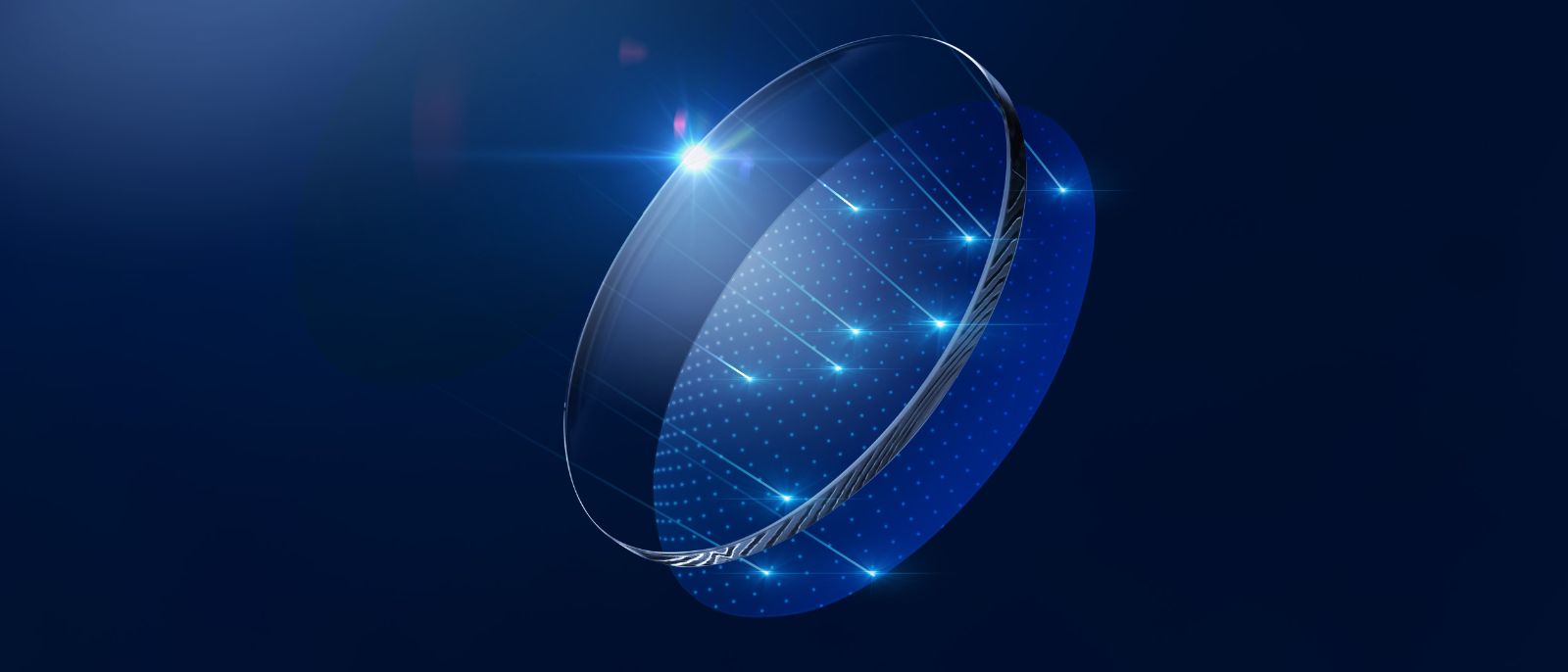
An optical lens is crafted from transparent materials such as glass or plastic and is designed to manipulate light through refraction. These lenses bend light to bring images into focus, produce magnification, enhance projection, and correct optical aberrations. While cameras and telescopes also use optical lenses, they primarily serve as the foundation for vision-correcting glasses.

Eyeglass lenses are classified as transmissive optical devices because they allow light to pass through. They come in various shapes with unique designs custom-layered onto each to allow precise light manipulation and magnification and to meet a wearer’s needs.

Understanding how optical lenses work

Refraction

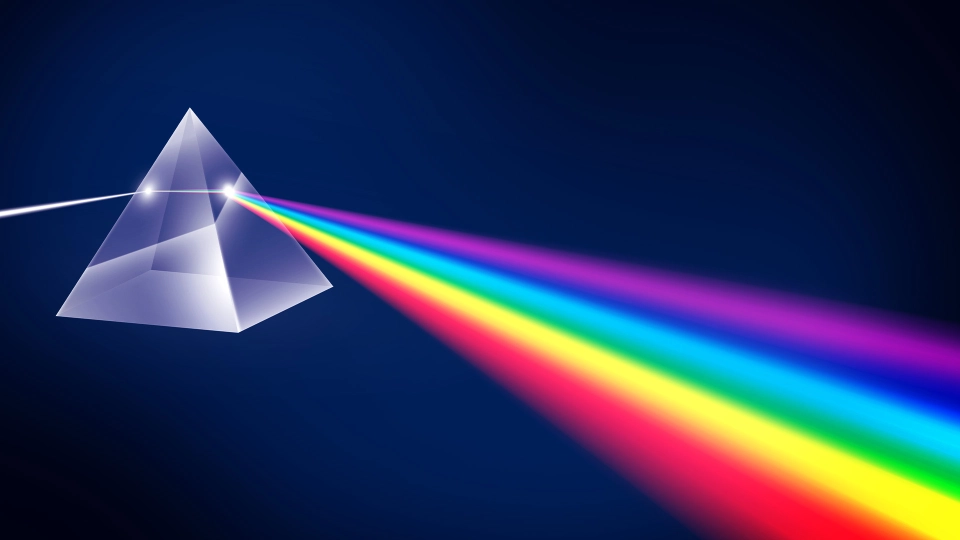
As light moves through a lens, it refracts or bends.  Refraction allows the lens to either converge (focus) or diverge (diffuse) the light rays passing through it. The degree to which the light bends is determined by the lens's refractive index, which dictates how much the speed of light is reduced as it enters the lens material. This slowdown in speed is critical for manipulating light’s path, making it essential for designing optical lenses. Vision is corrected by focusing light precisely on the retina. Additionally, labs can manipulate how and where light converges or diverges by altering the shape and material of a lens. 

Refraction drives optical lens technology, but it also collaborates with other factors, like shape and focal length, to manipulate light and images when a wearer looks through the lens.

Focal point and focal length

Focal point and focal length

The focal point is a specific spot along the optical axis where light rays converge after passing through the lens. This spot is crucial because it is where objects come into focus. The distance from the center of the lens to the focal point is known as the “focal length.” Lenses with a short focal length bend and focus light more sharply, giving them greater optical power. This makes them ideal for applications like reading glasses that require magnifying close objects but less suitable for applications that require significant magnification, like intense corrective lenses. Conversely, lenses with longer focal lengths bend light more gently and have lower optical power, making them better suited for observing distant objects, like when piloting planes or viewing faraway horizons in landscape photography.

Optical lens forms and types

Though lens shape and lens type are closely related, they have distinct characteristics and impact the lens’s function differently. 

Optical lens forms

The form of a lens refers to the physical curvature of the lens surfaces. The form and material of a lens significantly influence how it refracts light. Lenses can be convex, concave, or a combination of both, each form bending light differently. Convex lenses cause light rays to converge, focusing the light, while concave lenses cause light to diverge, spreading it out. The choice of material affects how much light slows down and must be considered when designing lenses to achieve the desired optical properties. 

Lenses fall into one of the following general categories: 

  • Convex: A surface curves outward 
  • Concave: A surface curves inward 
  • Plano: One surface remains flat and can be combined with a curve on its other side
  • Meniscus: Both surfaces are curved, but one is curved more significantly. 

Within these categories, lens shapes combine in ways that affect light refraction, prompting various changes in vision. The optical industry mainly uses a meniscus lens, while other subcategories are found in equipment ranging from projectors to telescopes. 

Positive and negative meniscus lenses

With a meniscus lens, both sides of the lens have a curve, but the curves bend opposite each other. One side will bend outwards, and the other will bend inwards (as opposed to biconvex, where both sides bow out, and biconcave lenses, where both sides bend inward). When looking at the lens, a positive meniscus lens is thicker in the center and thinner at the edges. A negative lens is the opposite and thinner in the center of the lens while thicker at the surrounding edge. The difference comes from addressing varying spherical aberrations. 

Optical meniscus lens types

Lenses can also be classified according to their form and structure. Frequently used lens forms in ophthalmics consist of:  

1. Spherical Lenses

These are the simplest form and most commonly used, with two spherical surfaces. Spherical lenses have rotational symmetry around the imaginary line that joins the center of each surface.

2. Astigmatic Lenses

Astigmatic forms are lenses with at least one astigmatic surface—a surface that does not have a uniform curvature—and therefore lack rotational symmetry.

3. Aspheric Lenses

This is a generic term which technically encompasses all lenses that are not spherical, like progressives and free form lenses. Aspherical lenses are manufactured from spherical semi-finished blanks with one aspherical surface, usually in the form of a conicoid.

4. Spherocylindrical Lenses

These are lenses that consist of a spherical and cylindrical surface. Spherocylindrical lenses were the first lens form used to correct ocular astigmatism.

5. Spherotoric Lenses

Spherotoric lenses consist of a front surface sphere and back surface torus and are the modern solution to correct ocular astigmatism.

6. Atoric Lenses

These lenses have a spherical front surface and an atoric back surface (varying curvatures across the lens) and are also designed to correct ocular astigmatism.

7. Freeform Lenses

Defined in ISO:18476:2017, a free form lens is a lens in which at least one free form surface is produced using free-form technology. This does not include conventional casting/molded front surface progressive-power surfaces.

As individuals can have unique visual requirements, lens forms sometimes combine elements from different meniscus lens types to provide proper visual corrections. 

Optical lens designs

Optical lens manufacturers can create custom lenses that fix nuanced and specific visual issues by blending various technologies, shapes, functions, and forms. The most common types of lens designs for vision issues are:

  • Monofocal lens: These correct for one field of vision, tackling either nearsightedness or farsightedness and addressing problems at one designated focal point. These are also known as single-vision lenses. 
  • Multifocal lenses: These lenses have multiple powers, so they adjust vision at varying focal points. Different types of multifocal lenses provide options for incorporating multiple powers in various techniques. This lens type includes progressive lenses, bifocals, trifocals, and custom designs for sports and certain professions. 

Lens design experts incorporate additional technologies to address specific visual needs. 

How to achieve optimal visual clarity with innovative lens technologies

Commitment to innovation and customization in optical lens technology goes a long way. Tailoring lens designs specifically to the nuanced requirements of a wearer can result in lenses that exceed expectations in performance and quality. Achieving optimal visual clarity involves technologies that achieve the following results: 

Minimize oblique aberrations

Away from the center of the lens, oblique aberrations can reduce optical quality. Minimizing this impact can significantly enhance wearer satisfaction and comfort. Technologies, like IOT’s Digital Ray Path 2, minimize peripheral blur common to lenses such as progressive lenses by incorporating a wearer’s accommodative capacity, creating a high-definition visual experience for wearers.

Learn more about Digital Ray-Path 2 technology →

Control of mean power

Thanks to our Steady Methodology, the swim effect found in progressive lenses is reduced by controlling for unwanted cylinder power and changes to mean power in the periphery. The additional technology added to the lens design significantly reduces blurring around the edge. 

Learn more about Steady Methodology technology →

Binocular balance improvement

Combining control of mean power distribution and optimization for binocular performance is achieved with Steady Plus Methodology. This results in the eyes perceiving symmetrical powers for each gaze direction.

Learn more about Steady Plus Methodology technology →

Increase visual correction through lens surface design

Combining complex curvatures on both lens surfaces results in variable base curves and flatter lenses. Camber technology provides labs with advanced custom lens curves bespoke to a patient’s visual needs. The technology provides an optimal visual experience for even the most complex presbyopic prescriptions.

Learn more about Camber technology →

Pioneering custom optical lens technology

The science behind optical lenses determines how well they function. The design and technology they incorporate impact all aspects, from light refraction to visual focus to oblique aberrations. 

IOT integrates sophisticated methodologies into each lens to cater to a broad spectrum of visual needs, ensuring function and comfort in every lens design.

To learn more about the science and technology driving the forefront of the optical industry, get in touch and see which IOT lens designs are right for your customers. 

To learn more about the science and technology at the forefront of the optical industry, fill out the form below.

You might also like:

  • What Are High-Index Lenses? Benefits and Considerations

Back to Blog

About the Authors

Carmen Cano
Carmen Cano
Clinical Research Optometrist

Carmen is a Clinical Research Optometrist at IOT Lenses. Her robust background in optometry has seen her serve in various roles, including at Quirónsalud and at +Vision. She holds a Master's degree in Clinical Optometry and Vision from Universidad Complutense de Madrid and an additional expert certification in Clinical Optometry from Udima Universidad a Distancia de Madrid.

  • Linkedin
Read more

Related items

How Lens Innovations Are Changing the Game for Myopia Management

How Lens Innovations Are Changing the Game for Myopia Management

22 sept 2025 | Amelia Gonzalez

Celebrating Independent Optical Businesses

Celebrating Independent Optical Businesses

19 ago 2025 | Laurie Pierce

Understanding Abbe Value and Why It Matters in Lens Design

Understanding Abbe Value and Why It Matters in Lens Design

14 jul 2025 | Eluned "Lil" Creighton-Sims

Optimum RX's Award-Winning Vision for the Future

Optimum RX's Award-Winning Vision for the Future

2 jun 2025 | Alicia López Lapeña

AI-Powered Lenses Are Here: What This Means for Labs, ECPs, and Patients

AI-Powered Lenses Are Here: What This Means for Labs, ECPs, and Patients

14 may 2025 | Ivan Sincek

What Are High-Index Lenses? Benefits & Considerations

What Are High-Index Lenses? Benefits & Considerations

30 abr 2025 | Mary Honeycutt

Sobre Nosotros
  • IOT en cifras
  • Los comienzos
  • Nuestro ADN
  • Nuestros cuatro pilares
  • Nuestros valores
CONTÁCTENOS
  • Contacta con ventas
  • Trabaja con nosotros
IOT Intelligence
  • Nuestro ecosistema de innovación
  • Nuestra metodología de innovación
  • IOT Freeform Designer
  • Tecnologías inteligentes
SERVICIOS PARA TU NEGOCIO
  • Full-Service Support
  • La experiencia IOT
  • IOT Business Consulting
  • IOT Technical Services
  • IOT Marketing Services
  • IOT Client Hub
LO QUE HACEMOS
  • Innovación como servicio
  • Nuestras tecnologías
  • Soluciones para la presbicia
  • Soluciones en monofocales
  • Neochromes
  • Custom lenses
  • Computer lenses
  • Comparativa de lentes
  • Soluciones
PRODUCTOS DESTACADOS
  • Neochromes with Camber
  • Camber Steady Plus Progressive
  • Endless Steady Progressive
  • Essential Steady Progressive
  • Endless Office Ocupational
  • Endless Drive Progressive
  • Endless Sport Progressive
  • Endless Single Vision
  • Endless Anti-fatigue Vision
Materiales
  • Trivex
  • CR-39
  • Policarbonato
  • Alto Índice
Our Brand Sites
  • light-form.com
  • neochromes.com
Política de Cookies Política de privacidad Aviso Legal Aviso Legal Canal de Denuncias ® Copyright 2021
Follow us on Linkedin Follow us on Facebook Follow us on Youtube Follow us on Instagram
Cookies

¿Aceptas nuestras cookies y política de privacidad?

Tu privacidad es importante para nosotros. Por ello te informamos que utilizamos cookies propias y de terceros para realizar análisis de uso y medición de nuestra página web con el fin de personalizar contenidos, así como proporcionar funcionalidades a las redes sociales o analizar nuestro tráfico. Para continuar acepta o modifica la configuración de nuestras cookies.

Rechazar Configurar cookies Aceptar
Política de Cookies
  • Tu privacidad
  • Cookies estrictamente necesarias
  • Cookies de preferencias o personalización
  • Cookies de análisis o medición
  • Política de Cookies

Tu privacidad es importante para nosotros

Las cookies son pequeños archivos de texto almacenados en tu ordenador cuando visitas nuestra web. Utilizamos cookies para mejorar tu experiencia en nuestro sitio web (por ejemplo, para recordar tu detalles de acceso).

Puedes cambiar tus preferencias y rechazar que algunos tipos de cookies sean almacenados en tu ordenador mientras estás navegando en nuestra web. Puedes cancelar cualquier cookie ya almacenada en tu ordenador, pero recuerda que cancelar los cookies puede impedirte utilizar algunas partes de nuestra web.

Cookies estrictamente necesarias

Estas cookies son esenciales para proveerte los servicios disponibles en nuestra web y para permitirte utilizar algunas características de nuestra web.


Cookies de preferencias o personalización

Estas cookies son utilizadas para ofrecerte una experiencia más personalizada y para recordar tus elecciones en nuestro sitio web.

Por ejemplo, podemos utilizar cookies de funcionalidad para recordar tu preferencias de idioma o tus detalles de acceso.

Cookies de análisis o medición

Estas cookies son utilizadas para recopilar información para analizar el tráfico en nuestra web y la forma en que los usuarios utilizan nuestra web.

Por ejemplo, estas cookies pueden recopilar datos como cuanto tiempo llevas navegado en nuestro sitio web o que páginas visitas, lo que nos ayuda a comprender cómo podemos mejorar nuestra web.

La información recopilada con estas cookies de análisis o medición no identifica a ningún visitante individual.

Política de Cookies

Para cumplir con la Ley 34/2002 de 11 de Julio, de Servicios de la Sociedad de la Información y el Comercio Electrónico (LSSICE), se informa de los siguientes aspectos legales:


PROPIEDAD DEL SITIO WEB

Responsable: INDIZEN OPTICAL TECHNOLOGIES SL - CIF B84465921- (En adelante IOT)
Domicilio social: C/Suero de Quiñones 34-36. 28002, Madrid (Madrid), España
Dirección: C/Suero de Quiñones 34-36. 28002, Madrid (Madrid), España
Contacto: Tel. 91 833 3786 - Email: proteccion_datos@iot.es
Datos de registro: Hoja M387390, folio 134, tomo 21750.
Actividad: Innovación en lentes


INFORMACIÓN Y TERMINOLOGÍAS ¿QUÉ SON LAS COOKIES?

Las cookies son archivos pequeños que las páginas web, tiendas online, intranets, plataformas online o similares, almacenan en el navegador del usuario que las visita y resultan necesarios para aportar a la navegación web innumerables ventajas en la prestación de servicios interactivos.

La siguiente información de los tipos posibles de cookies ayuda a comprender mejor las funciones que hacen posible:

  • Cookies de sesión: son cookies temporales que permanecen en el espacio de cookies de su equipo hasta que cierra el navegador, por lo que ninguna queda registrada en el disco del usuario. La información obtenida por medio de estas cookies sirve para hacer posible la gestión operativa con cada uno de los usuarios que está accediendo de forma simultánea a la web.
  • Cookies persistentes: son cookies que permanecen almacenadas en el espacio de cookies de su equipo una vez cerrado el navegador, y que volverá a consultar dicha página web la próxima vez que acceda a ella para recordar información que facilite la navegación (acceder directamente al servicio sin necesidad de hacer el proceso de login) o la prestación de un servicio comercial (ofrecer aquellos productos o servicios relacionados con anteriores visitas).

Las cookies intercambiadas al navegar por una página web pueden ser:

  • Cookies de origen o propias: son cookies generadas por la propia página web que se está visitando.
  • Cookies de terceros: son cookies que se reciben al navegar por esa página web, pero que han sido generadas por un tercer servicio que se encuentra hospedado en ella. Un ejemplo puede ser la cookie empleada por un anuncio o banner de publicidad que se encuentra en la página web que visitamos. Otro puede ser la cookie empleada por un contador de visitantes contratado por la página web que visitamos.

Las cookies pueden ser usadas para:

  • Fines técnicos: son las denominadas también “estrictamente necesarias”.  Permiten al  usuario  la  navegación a  través de una   página  web, plataforma o aplicación y la utilización de las diferentes opciones o servicios que en ella existan como, por  ejemplo, controlar el tráfico  y la comunicación de datos, identificar  la sesión, acceder a partes de acceso restringido, recordar los  elementos  que integran un pedido, realizar el proceso de compra de un pedido, realizar la solicitud de inscripción o participación en un evento, utilizar elementos de seguridad durante la navegación, almacenar contenidos para la difusión de videos o sonido o compartir contenidos a través de redes sociales.
  • Personalización: hacen posible que cada usuario pueda configurar aspectos como el lenguaje en el que desea ver la página web, formatos de visualización, etc.
  • Análisis o rendimiento: permiten medir el número de visitas y criterios de navegación de diferentes áreas de la web, aplicación o plataforma y nos permite elaborar perfiles de navegación de los usuarios de dichos sitios, aplicaciones y plataformas, con el fin de introducir mejoras en función del análisis de los datos de uso recabados que hacen los usuarios del servicio.
  • Publicidad: permiten implementar parámetros de eficiencia en la publicidad ofrecida en las páginas web.
  • Publicidad comportamental: permiten implementar parámetros de eficiencia en la publicidad ofrecida en las páginas web, basados en información sobre el comportamiento de los usuarios obtenido a través de la observación continuada de sus hábitos de navegación, lo que permite desarrollar un perfil específico para mostrar publicidad en función del mismo.


DETALLE DE COOKIES UTILIZADAS

El sitio Web de IOT utiliza cookies para el correcto funcionamiento y visualización de los sitios Web por parte del usuario, así como la recogida de datos estadísticos y analíticos sobre la navegación de los usuarios. IOT utiliza las siguientes cookies:
 

ANALÍTICAS Google Tag Manager

Descripción:
Estas Cookies recopilan información de tu experiencia de navegación en nuestros portales web de forma totalmente anónima. - Podemos contabilizar el número de visitantes de la página o los contenidos más vistos. 

Usos:

  • Podemos saber si el usuario que está accediendo es nuevo o repite visita.
  • Esa información puede ayudarnos a mejorar la navegación y darte un mejor servicio.


REDES SOCIALES

Descripción:
Las Cookies de redes sociales son utilizadas para unir la web con el perfil en la mencionada red social.

Usos:

  • Puedes hacer uso de este botón para redirigirte al perfil de IOT en LinkedIn, YouTube, Instagram y Facebook.


SERVICIOS DE TERCEROS

Adicionalmente, IOT tiene presencia en portales y servicios de terceros para los que, si desea conocer las condiciones de privacidad y uso de cookies, deberán consultarse las políticas proporcionadas por los mismos:

  • Facebook
  • Linkedin
  • Instagram
  • YouTube


ACEPTACIÓN POLÍTICA DE COOKIES

IOT muestra información sobre su Política de Cookies en la parte inferior de cualquier página del sitio Web con cada inicio de sesión con el objeto de que usted sea consciente.

Ante esta información es posible llevar a cabo las siguientes acciones:

  • Aceptar cookies: No se volverá a visualizar este aviso al acceder a cualquier página del portal durante la presente sesión
  • Rechazar cookies: No se volverá a visualizar este aviso al acceder a cualquier página del portal durante la presente sesión
  • Configuración de las cookies: Podrá obtener más información sobre cómo son las cookies, conocer la Política de Cookies de IOT y modificar la configuración para restringir o bloquear las cookies de IOT en cualquier momento. En el caso de restringir o bloquear las cookies puede ver reducidas las funcionalidades de la Web.


CÓMO MODIFICAR LA CONFIGURACIÓN DE LAS COOKIES

Usted puede restringir, bloquear o borrar las cookies de IOT o cualquier otra página web, utilizando su navegador. En cada navegador la operativa es diferente, la función de "Ayuda" le mostrará cómo hacerlo:

  • Internet Explorer
  • FireFox
  • Chrome
  • Safari
  • Opera


ACTUALIZACIÓN DE LA POLÍTICA DE COOKIES

Es posible que actualicemos la Política de Cookies de IOT, por ello le recomendamos revisar esta política cada vez que acceda a http://www.iotlenses.com con el objetivo de estar adecuadamente informado sobre cómo y para qué usamos las cookies.


Última actualización: 22 de diciembre de 2021