• EN
  • FR
  • ZH
  • DE
  • PT
  • IT
IOT See the difference
  • EN
  • FR
  • ZH
  • DE
  • PT
  • IT
  • Discover our lenses
    • Endless AI (New)
    • Progressive solutions
      • Camber Steady Plus Progressive
      • Endless Steady Progressive
      • Essential Steady Progressive
      • Endless Drive Progressive
      • Endless Sport Progressive
      • Endless Pilot Progressive
    • Occupational solutions
      • Endless Office Occupational
    • Bifocal solutions
      • Endless Bifocal
    • Single vision solutions
      • Endless Single Vision
      • Endless Anti-fatigue Single Vision
      • Endless Drive Single Vision
    • Neochromes
      • Neochromes Experience
      • Neochromes
      • Neochromes with Camber Technology
      • Neochromes Dark
      • Instructions for Use
    • Lens comparisons
  • Technologies
    • Camber Technology
    • IOT Digital Ray Path 2 Technology
    • Steady Methodology
    • Steady Plus Methodology
  • Services
    • IOT Business Consulting
    • IOT Technical Services
    • IOT Marketing Services
    • IOT Client Hub
    • IOT Solutions
  • Blog
  • Resource Hub
  • About IOT
    • Our company
    • IOT Intelligence
      • Our innovation ecosystem
      • Our innovation methodology
      • IOT Freeform Designer
      • Intelligent technologies
    • The IOT Experience
    • Innovation as service
    • IOT Events
    • Projects and Collaborations
    • IOT Ethics and Transparency
  • Contact us
    • Contact sales
    • Careers
  • Visit light-form.com
  • Discover our lenses
    • Endless AI (New)
    • Progressive solutions
      • Camber Steady Plus Progressive
      • Endless Steady Progressive
      • Essential Steady Progressive
      • Endless Drive Progressive
      • Endless Sport Progressive
      • Endless Pilot Progressive
    • Occupational solutions
      • Endless Office Occupational
    • Bifocal solutions
      • Endless Bifocal
    • Single vision solutions
      • Endless Single Vision
      • Endless Anti-fatigue Single Vision
      • Endless Drive Single Vision
    • Neochromes
      • Neochromes Experience
      • Neochromes
      • Neochromes with Camber Technology
      • Neochromes Dark
      • Instructions for Use
    • Lens comparisons
  • Technologies
    • Camber Technology
    • IOT Digital Ray Path 2 Technology
    • Steady Methodology
    • Steady Plus Methodology
  • Services
    • IOT Business Consulting
    • IOT Technical Services
    • IOT Marketing Services
    • IOT Client Hub
    • IOT Solutions
  • Blog
  • Resource Hub
  • About IOT
    • Our company
    • IOT Intelligence
      • Our innovation ecosystem
      • Our innovation methodology
      • IOT Freeform Designer
      • Intelligent technologies
    • The IOT Experience
    • Innovation as service
    • IOT Events
    • Projects and Collaborations
    • IOT Ethics and Transparency
  • Contact us
    • Contact sales
    • Careers
  • Visit light-form.com

Back to Blog

AI-Powered Lenses Are Here: What This Means for Labs, ECPs, and Patients

AI-Powered Lenses Are Here: What This Means for Labs, ECPs, and Patients

Published 14 may 2025 | 7 min
Category Lentes
Author
Ivan Sincek
Ivan Sincek
Sales Manager

  • What are AI lenses?
  • How do AI lenses work?
  • How AI transforms lens personalization
  • Why AI is the future for optical labs and ECPs
  • 1. Better decision-making for ECPs
  • 2. AI progressive lenses reducing adaptation issues
  • 3. Enhanced efficiencies for labs
  • 4. Competitive differentiation
  • The benefits of Endless AI
  • 1. Real-time lens optimization
  • 2. Improved patient confidence
  • 3. Material and coating optimization
  • 4. Second pair recommendations
AI-Powered Lenses Are Here: What This Means for Labs, ECPs, and Patients

AI-Powered Lenses Are Here: What This Means for Labs, ECPs, and Patients

The use of artificial intelligence is growing across industries, advancing reasoning, tech, and design globally, and the ophthalmology industry is no different. AI helps change how lenses are designed, manufactured, and prescribed. For labs and eye care professionals (ECPs), AI-driven lens innovation leads to remarkable personalization, precision, manufacturing efficiency, and improved patient outcomes. It’s key for optical chains, online retailers, and ECPs to understand how AI helps optimize operations and reveal patterns that lead to better prescribed eyecare solutions. Endless AI by IOT, for example, leans into this trend by using AI that integrates ideal lens features with key factors like lifestyle, expectations, preferences, and satisfaction data from previous wearers, to create a solution uniquely tailored for each wearer.

What are AI lenses?

AI lenses are ophthalmic lenses created or refined using artificial intelligence. These lenses are single-vision, progressive, or specialized designs. Unlike traditional lenses that rely on standardized designs and limited customization options, AI-powered lenses use complex algorithms to analyze multiple data points about each wearer to generate a hyper-personalized design for the wearer’s visual demands. 

AI goes beyond traditional parameters (sphere, cylinder, and axis) to assess a patient’s vision. The AI additionally factors in a patient’s occupation, daily activities, environment, and usage patterns to choose a lens design that offers better personalization, faster adaptation, sharpness, and comfort.

How do AI lenses work?
How do AI lenses work?

AI systems analyze large datasets about wearer profiles, prescriptions, lifestyle information, and visual issues. These datasets often contain hundreds of thousands of profiles, filled with data that AI quickly parses into patterns and insights. AI compares the new patient’s profile with similar profiles in the dataset to determine which lenses had the highest satisfaction. Through continuous learning, the algorithms become skilled at identifying which lens features work best for each specific scenario. 

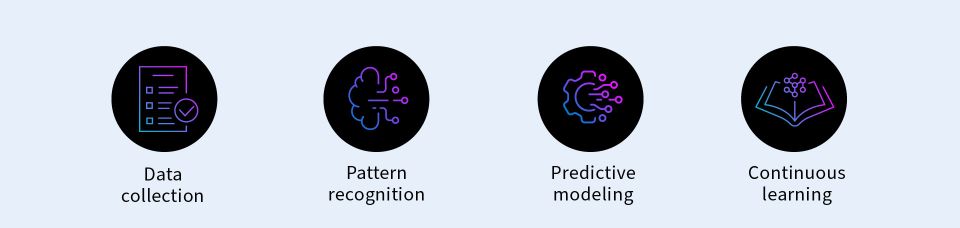
At the core, AI lens technology works in a few easy steps: 

  1. Data collection: Gathering comprehensive information about the wearer through advanced diagnostic tools and questionnaires
  2. Pattern recognition: Identifying correlations between visual needs and optimal lens designs
  3. Predictive modeling: Forecasting the most suitable lens configurations based on similar profiles
  4. Continuous learning: Refining recommendations through feedback and outcomes

How AI transforms lens personalization

AI can hyper-personalize lenses for patients to a specificity not yet seen. A decade ago, progressive lenses were considered advanced if they could effectively minimize distortions through a conventional corridor. Today, AI-driven design interprets massive datasets and user feedback to propose micro-recommendations for corridor length, lens curvature, or recommended coatings that match a wearer’s lifestyle and visual habits. 

Using AI allows lens designers to incorporate more layers of information, such as occupational and recreational needs. Some personalization factors AI systems are adept at assessing are:

  1. Occupational needs: Optimizing intermediate zones for computer users or enhancing distance clarity for drivers
  2. Recreational activities: Tailoring lens performance for specific hobbies or sports
  3. Environmental factors: Adjusting designs for different lighting conditions or geographical locations
  4. Wearing history: Accounting for previous lens experiences and preferences

AI makes good use of these factors by evaluating thousands of possible lens combinations in real-time, identifying optimal features based on a patient’s biometrics and profile compared to similar profiles in the dataset. This enables a level of specificity that would be impossible through manual calculation alone. It also goes a step beyond relying on theoretical optical models and incorporates real-world wearing experiences.

Why AI is the future for optical labs and ECPs

AI is reshaping the workflows of optical labs, manufacturers, and ECP practices by improving operations with measures like real-time data analytics and automated lens processing equipment. It streamlines production by offering predictive maintenance for machinery, ensuring quality control, and providing advanced patient care. Some of the most popular reasons AI is taking a stronghold in the ophthalmic industry are: 

1. Better decision-making for ECPs

AI-powered data modeling reduces guesswork. The system suggests an evidence-based lens configuration that is more accurate from the outset, improving wearer satisfaction and saving valuable time for both patient and practitioner. ECPs can also have more confidence when prescribing lenses due to the data-backed validation confirmed by AI. These personalized solutions can lead to less trial and error, meaning greater patient happiness. 

2. AI progressive lenses reducing adaptation issues

One of the most significant challenges in prescribing progressive lenses has always been adaptation difficulties. AI systems help address this by:

  • Predicting potential adaptation issues before they occur
  • Recommending designs that match individual adaptation capabilities
  • Suggesting optimal frame selection to complement lens design
  • Adjusting parameters to minimize peripheral distortion based on individual sensitivity

The result is a progressive lens that feels more intuitive, adapting to a patient’s gaze and posture more naturally than traditionally designed progressive lenses.

3. Enhanced efficiencies for labs

For optical labs, one of AI’s most compelling advantages is efficiency. By analyzing every job order in real time, AI can make recommendations on manufacturing parameters that optimize both material usage and production speed. Labs can route complex prescriptions to equipment best suited for the job, predict lens breakage or coating failures, and even optimize inventory levels. 

More accurate predictions of wearer satisfaction mean fewer returns and adjustments. The advanced pattern recognition of AI can also detect subtle defects that might otherwise be missed. These operational enhancements can translate into significant cost savings over time.

4. Competitive differentiation

Only a few companies have intentionally introduced AI into their daily practices. In a competitive market, this allows labs and ECPs to offer a unique value proposition and brand differentiation. Offering an advanced technology also justifies premium price points. Even once AI becomes ubiquitous throughout the industry, there is value in being an early adopter and remaining steps ahead of the competition by understanding AI’s practical use. 

The benefits of Endless AI
The benefits of Endless AI

Endless AI is a lens design powered by IOT Artificial Intelligence technology to create hyper-personalized lenses. Endless AI considers many factors beyond prescription details, such as lifestyle habits, reading distances, environmental variables, and personal preferences. Traditional lens design approaches might rely on sporadic or limited feedback from controlled clinical studies. Endless AI, by contrast, collects real-world input from large swaths of wearers to create a progressive, anti-fatigue, or single-vision prescription. Once the AI platform recommends a lens, the system continues to learn and refine its data model based on wearer feedback and performance data. 

As a result, every subsequent patient benefits from the experiences of all who came before them, creating an ever-evolving ecosystem of lens intelligence. The continuous learning function allows AI to adapt designs more quickly and accurately, discovering new relationships between lens features and user experiences that might otherwise remain hidden.

Endless AI provides additional benefits like: 

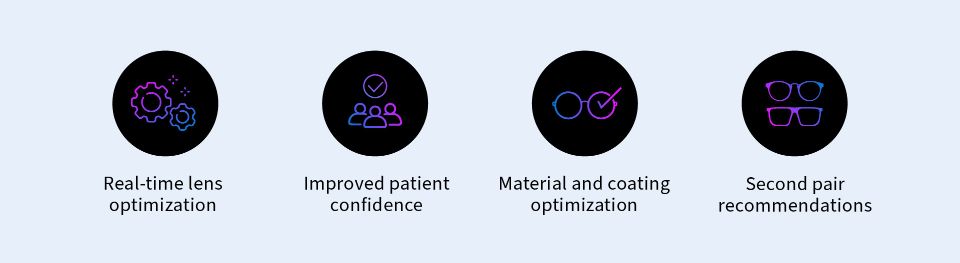
1. Real-time lens optimization

Endless AI evaluates thousands of possible lens combinations instantaneously, identifying optimal features for each wearer base. This capability transforms the lens selection process from educated guesswork to precision engineering. AI removes much of the subjectivity that comes with human decision-making, letting data drive the lens selection process.

2. Improved patient confidence

Patients often report higher satisfaction levels with a more precise lens from the outset, reducing the need for multiple follow-up visits or lens remakes. In a study of over 5,000 progressive lens wearers, 96% were satisfied with their Endless AI lenses, with 86% reporting very high satisfaction. Even among groups that typically struggle with progressives, results were strong: first-time progressive wearers reported an adaptation satisfaction of 4.19/5, and myopic wearers rated near-vision satisfaction at 4.22/5. These results significantly outperform traditional lenses and help build lasting patient trust.

3. Material and coating optimization

While lens design is critical, materials and coatings can be a determining factor for a patient’s visual experience. Endless AI suggests lens finishes—anti-reflective coatings, UV protection, and anti-scratch—that align with how patients use their lenses daily.

4. Second pair recommendations

By analyzing each wearer’s environment and habits, Endless AI can suggest personalized second pairs of lenses, such as dedicated computer glasses, polarized lenses, or even photochromics. These complement a wearer’s primary eyewear, solving for the additional concern from the outset instead of waiting for a patient to return to the ECP and request additional visual help later. 

The emergence of AI-powered lenses signals a significant shift in the ophthalmic industry. With tools like IOT’s Endless AI leading the charge, it’s clear that personalization and data-driven insights will become the standard rather than the exception. For optical labs, ECPs, and retailers—whether large chains or online platforms—adopting AI-driven technology can yield tangible benefits in patient satisfaction, operational efficiencies, and professional credibility.

Labs that embrace AI will likely set themselves apart as innovators, capable of delivering cutting-edge solutions faster and more precisely. Meanwhile, ECPs can elevate their practice by offering hyper-personalized lens options, deepening patient trust, and improving outcomes.

AI-powered lenses transform how vision correction is conceived, designed, and delivered. As the technology progresses, we can expect to see more innovation in diagnosing and correcting visual needs. 

If you’re interested in learning more about how AI-powered lens designs can improve your practice or lab, please get in touch. 

You may also like: 
What Are Progressive Lenses & How Do They Work?
The Complete Guide to Bifocal Lenses
Guide to Optical Lenses: The Science Behind How They Work


Back to Blog

About the Authors

Ivan Sincek
Ivan Sincek
Sales Manager

Ivan Sincek is Sales Manager for Central Europe, the UK, and Scandinavia at IOT Lenses. He studied optometry in Switzerland and began his career in clinical practice before joining mark’ennovy, where he held various roles across Spain and Germany from 2012 to 2023. Since 2023, he has been part of the IOT team, bringing deep industry knowledge and international experience to his current role.

  • Linkedin
Read more

Related items

How Lens Innovations Are Changing the Game for Myopia Management

How Lens Innovations Are Changing the Game for Myopia Management

22 sept 2025 | Amelia Gonzalez

Celebrating Independent Optical Businesses

Celebrating Independent Optical Businesses

19 ago 2025 | Laurie Pierce

Understanding Abbe Value and Why It Matters in Lens Design

Understanding Abbe Value and Why It Matters in Lens Design

14 jul 2025 | Eluned "Lil" Creighton-Sims

Optimum RX's Award-Winning Vision for the Future

Optimum RX's Award-Winning Vision for the Future

2 jun 2025 | Alicia López Lapeña

AI-Powered Lenses Are Here: What This Means for Labs, ECPs, and Patients

AI-Powered Lenses Are Here: What This Means for Labs, ECPs, and Patients

14 may 2025 | Ivan Sincek

What Are High-Index Lenses? Benefits & Considerations

What Are High-Index Lenses? Benefits & Considerations

30 abr 2025 | Mary Honeycutt

Sobre Nosotros
  • IOT en cifras
  • Los comienzos
  • Nuestro ADN
  • Nuestros cuatro pilares
  • Nuestros valores
CONTÁCTENOS
  • Contacta con ventas
  • Trabaja con nosotros
IOT Intelligence
  • Nuestro ecosistema de innovación
  • Nuestra metodología de innovación
  • IOT Freeform Designer
  • Tecnologías inteligentes
SERVICIOS PARA TU NEGOCIO
  • Full-Service Support
  • La experiencia IOT
  • IOT Business Consulting
  • IOT Technical Services
  • IOT Marketing Services
  • IOT Client Hub
LO QUE HACEMOS
  • Innovación como servicio
  • Nuestras tecnologías
  • Soluciones para la presbicia
  • Soluciones en monofocales
  • Neochromes
  • Custom lenses
  • Computer lenses
  • Comparativa de lentes
  • Soluciones
PRODUCTOS DESTACADOS
  • Neochromes with Camber
  • Camber Steady Plus Progressive
  • Endless Steady Progressive
  • Essential Steady Progressive
  • Endless Office Ocupational
  • Endless Drive Progressive
  • Endless Sport Progressive
  • Endless Single Vision
  • Endless Anti-fatigue Vision
Materiales
  • Trivex
  • CR-39
  • Policarbonato
  • Alto Índice
Our Brand Sites
  • light-form.com
  • neochromes.com
Política de Cookies Política de privacidad Aviso Legal Aviso Legal Canal de Denuncias ® Copyright 2021
Follow us on Linkedin Follow us on Facebook Follow us on Youtube Follow us on Instagram
Cookies

¿Aceptas nuestras cookies y política de privacidad?

Tu privacidad es importante para nosotros. Por ello te informamos que utilizamos cookies propias y de terceros para realizar análisis de uso y medición de nuestra página web con el fin de personalizar contenidos, así como proporcionar funcionalidades a las redes sociales o analizar nuestro tráfico. Para continuar acepta o modifica la configuración de nuestras cookies.

Rechazar Configurar cookies Aceptar
Política de Cookies
  • Tu privacidad
  • Cookies estrictamente necesarias
  • Cookies de preferencias o personalización
  • Cookies de análisis o medición
  • Política de Cookies

Tu privacidad es importante para nosotros

Las cookies son pequeños archivos de texto almacenados en tu ordenador cuando visitas nuestra web. Utilizamos cookies para mejorar tu experiencia en nuestro sitio web (por ejemplo, para recordar tu detalles de acceso).

Puedes cambiar tus preferencias y rechazar que algunos tipos de cookies sean almacenados en tu ordenador mientras estás navegando en nuestra web. Puedes cancelar cualquier cookie ya almacenada en tu ordenador, pero recuerda que cancelar los cookies puede impedirte utilizar algunas partes de nuestra web.

Cookies estrictamente necesarias

Estas cookies son esenciales para proveerte los servicios disponibles en nuestra web y para permitirte utilizar algunas características de nuestra web.


Cookies de preferencias o personalización

Estas cookies son utilizadas para ofrecerte una experiencia más personalizada y para recordar tus elecciones en nuestro sitio web.

Por ejemplo, podemos utilizar cookies de funcionalidad para recordar tu preferencias de idioma o tus detalles de acceso.

Cookies de análisis o medición

Estas cookies son utilizadas para recopilar información para analizar el tráfico en nuestra web y la forma en que los usuarios utilizan nuestra web.

Por ejemplo, estas cookies pueden recopilar datos como cuanto tiempo llevas navegado en nuestro sitio web o que páginas visitas, lo que nos ayuda a comprender cómo podemos mejorar nuestra web.

La información recopilada con estas cookies de análisis o medición no identifica a ningún visitante individual.

Política de Cookies

Para cumplir con la Ley 34/2002 de 11 de Julio, de Servicios de la Sociedad de la Información y el Comercio Electrónico (LSSICE), se informa de los siguientes aspectos legales:


PROPIEDAD DEL SITIO WEB

Responsable: INDIZEN OPTICAL TECHNOLOGIES SL - CIF B84465921- (En adelante IOT)
Domicilio social: C/Suero de Quiñones 34-36. 28002, Madrid (Madrid), España
Dirección: C/Suero de Quiñones 34-36. 28002, Madrid (Madrid), España
Contacto: Tel. 91 833 3786 - Email: proteccion_datos@iot.es
Datos de registro: Hoja M387390, folio 134, tomo 21750.
Actividad: Innovación en lentes


INFORMACIÓN Y TERMINOLOGÍAS ¿QUÉ SON LAS COOKIES?

Las cookies son archivos pequeños que las páginas web, tiendas online, intranets, plataformas online o similares, almacenan en el navegador del usuario que las visita y resultan necesarios para aportar a la navegación web innumerables ventajas en la prestación de servicios interactivos.

La siguiente información de los tipos posibles de cookies ayuda a comprender mejor las funciones que hacen posible:

  • Cookies de sesión: son cookies temporales que permanecen en el espacio de cookies de su equipo hasta que cierra el navegador, por lo que ninguna queda registrada en el disco del usuario. La información obtenida por medio de estas cookies sirve para hacer posible la gestión operativa con cada uno de los usuarios que está accediendo de forma simultánea a la web.
  • Cookies persistentes: son cookies que permanecen almacenadas en el espacio de cookies de su equipo una vez cerrado el navegador, y que volverá a consultar dicha página web la próxima vez que acceda a ella para recordar información que facilite la navegación (acceder directamente al servicio sin necesidad de hacer el proceso de login) o la prestación de un servicio comercial (ofrecer aquellos productos o servicios relacionados con anteriores visitas).

Las cookies intercambiadas al navegar por una página web pueden ser:

  • Cookies de origen o propias: son cookies generadas por la propia página web que se está visitando.
  • Cookies de terceros: son cookies que se reciben al navegar por esa página web, pero que han sido generadas por un tercer servicio que se encuentra hospedado en ella. Un ejemplo puede ser la cookie empleada por un anuncio o banner de publicidad que se encuentra en la página web que visitamos. Otro puede ser la cookie empleada por un contador de visitantes contratado por la página web que visitamos.

Las cookies pueden ser usadas para:

  • Fines técnicos: son las denominadas también “estrictamente necesarias”.  Permiten al  usuario  la  navegación a  través de una   página  web, plataforma o aplicación y la utilización de las diferentes opciones o servicios que en ella existan como, por  ejemplo, controlar el tráfico  y la comunicación de datos, identificar  la sesión, acceder a partes de acceso restringido, recordar los  elementos  que integran un pedido, realizar el proceso de compra de un pedido, realizar la solicitud de inscripción o participación en un evento, utilizar elementos de seguridad durante la navegación, almacenar contenidos para la difusión de videos o sonido o compartir contenidos a través de redes sociales.
  • Personalización: hacen posible que cada usuario pueda configurar aspectos como el lenguaje en el que desea ver la página web, formatos de visualización, etc.
  • Análisis o rendimiento: permiten medir el número de visitas y criterios de navegación de diferentes áreas de la web, aplicación o plataforma y nos permite elaborar perfiles de navegación de los usuarios de dichos sitios, aplicaciones y plataformas, con el fin de introducir mejoras en función del análisis de los datos de uso recabados que hacen los usuarios del servicio.
  • Publicidad: permiten implementar parámetros de eficiencia en la publicidad ofrecida en las páginas web.
  • Publicidad comportamental: permiten implementar parámetros de eficiencia en la publicidad ofrecida en las páginas web, basados en información sobre el comportamiento de los usuarios obtenido a través de la observación continuada de sus hábitos de navegación, lo que permite desarrollar un perfil específico para mostrar publicidad en función del mismo.


DETALLE DE COOKIES UTILIZADAS

El sitio Web de IOT utiliza cookies para el correcto funcionamiento y visualización de los sitios Web por parte del usuario, así como la recogida de datos estadísticos y analíticos sobre la navegación de los usuarios. IOT utiliza las siguientes cookies:
 

ANALÍTICAS Google Tag Manager

Descripción:
Estas Cookies recopilan información de tu experiencia de navegación en nuestros portales web de forma totalmente anónima. - Podemos contabilizar el número de visitantes de la página o los contenidos más vistos. 

Usos:

  • Podemos saber si el usuario que está accediendo es nuevo o repite visita.
  • Esa información puede ayudarnos a mejorar la navegación y darte un mejor servicio.


REDES SOCIALES

Descripción:
Las Cookies de redes sociales son utilizadas para unir la web con el perfil en la mencionada red social.

Usos:

  • Puedes hacer uso de este botón para redirigirte al perfil de IOT en LinkedIn, YouTube, Instagram y Facebook.


SERVICIOS DE TERCEROS

Adicionalmente, IOT tiene presencia en portales y servicios de terceros para los que, si desea conocer las condiciones de privacidad y uso de cookies, deberán consultarse las políticas proporcionadas por los mismos:

  • Facebook
  • Linkedin
  • Instagram
  • YouTube


ACEPTACIÓN POLÍTICA DE COOKIES

IOT muestra información sobre su Política de Cookies en la parte inferior de cualquier página del sitio Web con cada inicio de sesión con el objeto de que usted sea consciente.

Ante esta información es posible llevar a cabo las siguientes acciones:

  • Aceptar cookies: No se volverá a visualizar este aviso al acceder a cualquier página del portal durante la presente sesión
  • Rechazar cookies: No se volverá a visualizar este aviso al acceder a cualquier página del portal durante la presente sesión
  • Configuración de las cookies: Podrá obtener más información sobre cómo son las cookies, conocer la Política de Cookies de IOT y modificar la configuración para restringir o bloquear las cookies de IOT en cualquier momento. En el caso de restringir o bloquear las cookies puede ver reducidas las funcionalidades de la Web.


CÓMO MODIFICAR LA CONFIGURACIÓN DE LAS COOKIES

Usted puede restringir, bloquear o borrar las cookies de IOT o cualquier otra página web, utilizando su navegador. En cada navegador la operativa es diferente, la función de "Ayuda" le mostrará cómo hacerlo:

  • Internet Explorer
  • FireFox
  • Chrome
  • Safari
  • Opera


ACTUALIZACIÓN DE LA POLÍTICA DE COOKIES

Es posible que actualicemos la Política de Cookies de IOT, por ello le recomendamos revisar esta política cada vez que acceda a http://www.iotlenses.com con el objetivo de estar adecuadamente informado sobre cómo y para qué usamos las cookies.


Última actualización: 22 de diciembre de 2021