• EN
  • FR
  • ZH
  • DE
  • PT
  • IT
IOT See the difference
  • EN
  • FR
  • ZH
  • DE
  • PT
  • IT
  • Discover our lenses
    • Endless AI (New)
    • Progressive solutions
      • Camber Steady Plus Progressive
      • Endless Steady Progressive
      • Essential Steady Progressive
      • Endless Drive Progressive
      • Endless Sport Progressive
      • Endless Pilot Progressive
    • Occupational solutions
      • Endless Office Occupational
    • Bifocal solutions
      • Endless Bifocal
    • Single vision solutions
      • Endless Single Vision
      • Endless Anti-fatigue Single Vision
      • Endless Drive Single Vision
    • MyoLess
    • Neochromes
      • Neochromes Experience
      • Neochromes
      • Neochromes with Camber Technology
      • Neochromes Dark
      • Instructions for Use
    • Lens comparisons
  • Technologies
    • Camber Technology
    • IOT Digital Ray Path 2 Technology
    • Steady Methodology
    • Steady Plus Methodology
  • Services
    • IOT Business Consulting
    • IOT Technical Services
    • IOT Marketing Services
    • IOT Client Hub
    • IOT Solutions
  • Blog
  • Resource Hub
  • About IOT
    • Our company
    • IOT Intelligence
      • Our innovation ecosystem
      • Our innovation methodology
      • IOT Freeform Designer
      • Intelligent technologies
    • The IOT Experience
    • Innovation as service
    • IOT Events
    • Projects and Collaborations
    • IOT Ethics and Transparency
  • Contact us
    • Contact sales
    • Careers
  • Visit light-form.com
  • Discover our lenses
    • Endless AI (New)
    • Progressive solutions
      • Camber Steady Plus Progressive
      • Endless Steady Progressive
      • Essential Steady Progressive
      • Endless Drive Progressive
      • Endless Sport Progressive
      • Endless Pilot Progressive
    • Occupational solutions
      • Endless Office Occupational
    • Bifocal solutions
      • Endless Bifocal
    • Single vision solutions
      • Endless Single Vision
      • Endless Anti-fatigue Single Vision
      • Endless Drive Single Vision
    • MyoLess
    • Neochromes
      • Neochromes Experience
      • Neochromes
      • Neochromes with Camber Technology
      • Neochromes Dark
      • Instructions for Use
    • Lens comparisons
  • Technologies
    • Camber Technology
    • IOT Digital Ray Path 2 Technology
    • Steady Methodology
    • Steady Plus Methodology
  • Services
    • IOT Business Consulting
    • IOT Technical Services
    • IOT Marketing Services
    • IOT Client Hub
    • IOT Solutions
  • Blog
  • Resource Hub
  • About IOT
    • Our company
    • IOT Intelligence
      • Our innovation ecosystem
      • Our innovation methodology
      • IOT Freeform Designer
      • Intelligent technologies
    • The IOT Experience
    • Innovation as service
    • IOT Events
    • Projects and Collaborations
    • IOT Ethics and Transparency
  • Contact us
    • Contact sales
    • Careers
  • Visit light-form.com

Back to Blog

5 Types of Lens Coatings: What Labs & ECPs Need to Know

5 Types of Lens Coatings: What Labs & ECPs Need to Know

Published 9 sept 2025 | 8 min
Category Manufacturing
Author
Victor Mayoral Bruno
Process Engineer Manager

  • 1. Anti-reflective (AR) coatings
  • 2. Scratch-resistant protective coatings
  • 3. UV blocking coatings
  • 4. Blue light filters
  • 5. Mirror coatings
  • Common coating problems and solutions
  • 1. Adhesion failures
  • 2. Uneven curing or coating
  • 3. Optical quality issues
  • Best practices for labs applying coatings
  • Maximize coating performance with IOT
5 Types of Lens Coatings: What Labs & ECPs Need to Know

5 Types of Lens Coatings: What Labs & ECPs Need to Know

Lens coatings are not often the first topic that comes to mind when someone mentions lens design, yet they are just as important as any other aspect of the eyeglasses. These advanced thin-film technologies improve patient satisfaction, optimize visual performance, and extend lens durability. Yet, not all coatings are created equal. 

Labs and eye care professionals (ECPs) must balance material compatibility, coating process, wear resistance, and patient lifestyle when recommending or applying coatings. Because even when manufacturers apply coatings with molecular-level precision, wearers only notice a benefit when it solves their optical problems. Understanding coating fundamentals and application best practices will help ECPs prescribe better solutions and labs to avoid coating failures. 

Comprehension begins with a better understanding of the differences between various coatings. Essential lens coatings on the market today are as follows: 

1. Anti-reflective (AR) coatings

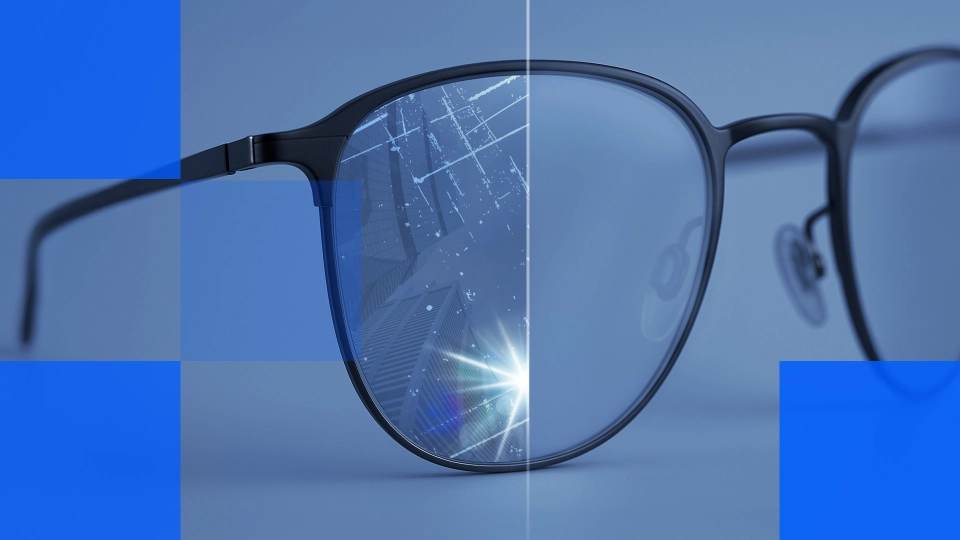
Anti-reflective (AR) coatings reduce surface reflections on the front and back of lenses. This boosts light transmission, improves night vision, reduces glare from screens or headlights, and enhances cosmetic appearance by making the lenses more transparent.

High-performance professionals, such as surgeons and pilots, benefit from premium AR systems that offer superior clarity and minimal reflections. If a patient works in an environment with airborne contaminants and frequently touches their lenses, they will benefit from the additional oleophobic treatment.

AR coating veriations

  • Standard AR coatings: Stock standard coatings use alternating layers of high and low refractive index materials. The standard AR provides reduced glare at a lower cost when compared to premium coatings. 
  • Hydrophobic/oleophobic AR: Added to the Basic AR coating, a topcoat that repels water and resists oil and fingerprints to reduce smudging. The performance difference is noticeable in challenging environments or with patients who have higher visual demands. 
  • Ion-assisted deposition AR coatings: This premium AR coating is formed through ion bombardment during deposition, creating denser, more durable films. This coating type is more expensive than standard AR, but offers greater longevity and improved optical performance. 

2. Scratch-resistant protective coatings

Hard coatings provide a protective layer that improves surface durability during everyday use and cleaning. This makes a lens more resistant to scratches, particularly when working with softer, high-index materials like 1.60, 1.67, or 1.74, which are more prone to surface damage than CR-39. Polycarbonate is also especially delicate and benefits significantly from a hard coating. While most lenses today include this layer, some low-cost CR-39 lenses are still occasionally sold without one, putting them at greater risk of cosmetic defects and reduced clarity over time.

It’s important to always match the scratch-resistant coating to the lens substrate. For example, coatings formulated for Trivex won’t perform the same on polycarbonate. Additionally, a coat needs to polymerize for the exact correct time and temperature, as under-cured hard coats create weak spots that evolve into coating failures months later. Conversely, over-curing can create surface stress that leads to cracking and also produces a yellowish effect. The index of the lacquer needs to match the lens index to avoid the Newton rings effect on the lenses.

Patients with an active lifestyle benefit from protective coatings that can withstand more stress, activity, and cleaning. 

Key points

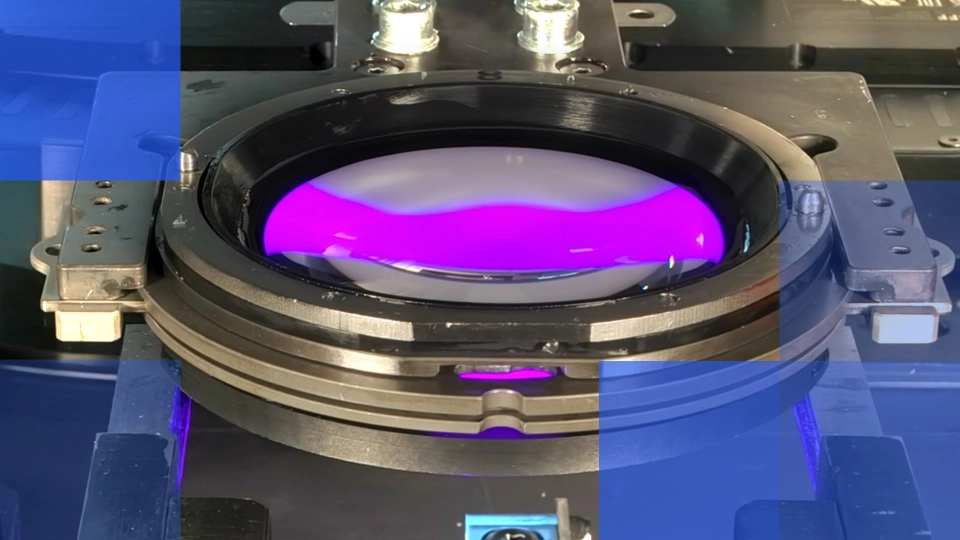
  • Thermal cure (Dip coating) vs. UV cure (Spin Coating): Thermal curing produces harder, more durable layers. UV-cured coatings offer faster processing but may be slightly less resistant to wear.
  • Dip vs. spin coating: Dip coating tends to yield more uniform results but requires cleanroom conditions. Most high volume labs use it because the dip coating machine can process and produce more lenses. However, for just one order, spin coating has a shorter processing time. 

3. UV blocking coatings

UV light-blocking coatings provide additional protection on lenses where substrate absorption may be incomplete, and they allow for UV protection in materials that don't inherently block UV radiation. This helps prevent cumulative UV damage to the eye, like cataracts, pterygium, and retinal issues. 

Often, designs combine UV coatings with photochromic lenses. These lenses provide a fast fade-to-black effect when exposed to UV light and quickly clear when UV light is removed. 

Key points

  • Interaction considerations with other coatings: The interaction between UV coatings and other coating layers can sometimes cause issues. Some UV absorbers can interfere with AR coating performance or cause premature degradation of other coating components under intense UV exposure.
  • Application: Combine UV-blocking coatings with AR to avoid back-surface UV reflection.

4. Blue light filters

Blue light filtering coatings are in higher demand as more people spend hours each day on digital devices. These filters have evolved from simple yellow tints to selective filters that target short-wavelength blue light (typically in the 400–455 nm range), which is associated with digital eye strain and potential circadian disruption. LED lights emit the higher-energy blue light at 450 nm.

There are different types of blue-blocking coatings, with some blocking a narrow slice of blue light and others maintaining a broader blocked spectrum: 

Blue light coating variations

  • Absorptive blue light filters: These filters absorb specific wavelengths of blue light by incorporating chromophores directly into the coating. Absorptive blue light lenses often have a yellow or amber tint. This coating type provides consistent filtering regardless of viewing angle, but can introduce slight color shifts to the wearer. 
  • Reflective blue light filters: These filters have a special coating on the lens surface that reflects (rather than absorbs) specific wavelengths of blue light away from your eyes. This approach has minimal color distortion to the wearer, but the lenses have slight blue reflections that are cosmetically noticeable. The filtering effectiveness also varies with viewing angle. These filters block a smaller percentage of light compared to absorptive filters. 

5. Mirror coatings

Mirror coatings reflect visible light and reduce glare in high-brightness environments, such as bright sunlight, water, and snow. The most significant difference between AR coatings is their aesthetic appearance. Mirror coatings have a highly reflective surface and are available in a variety of colors, adding a stylish and personalized touch. Lenses with a mirror coating are popular in sportswear due to their aesthetic appeal. 

Key points

  • Base preparation for coating: Mirror coatings are typically applied over a tinted or polarized base lens and must be paired with durable scratch-resistant and anti-reflective stacks underneath to protect against abrasion.
  • Colors change purpose: Different colors of a mirror coat work better in different conditions. For example, a blue mirror coat is helpful in conditions with a lot of blue light, such as on the ocean or snow. A red mirror coat is more useful on very sunny days. 

Common coating problems and solutions

Coating failures rarely occur randomly. They typically result from process deviations or environmental factors. Understanding common coating problems helps labs implement preventive measures and improve yields.

1. Adhesion failures

Adhesion failures manifest as coating peeling or flaking and typically result from improper surface preparation or contamination. Even minor residue on the lens can disrupt coating bonds. Common causes include insufficient cleaning, poor surface etching, both in HC (hard coat) and/or AR (anti-reflective), residual polishing compounds, or inconsistencies in plasma treatment. 

Solution: Labs should implement rigorous cleaning protocols and regular maintenance of the plasma system, AR machines, and HC machines.  

2. Uneven curing or coating

Variability in spin speed, cure temperature, or dipping lift-out speed can result in patchy coatings. An uneven coating layer leaves weak spots if unprotected or areas more likely to crack if the coating is too thick. This results in less durability and premature wear. 

Solution: Check regularly solid contents of the lacquers, lift-out speed, viscosity, etc. Utilize precision-calibrated machinery and conduct regular quality control tests (e.g., Bayer tests) to ensure optimal performance.

3. Optical quality issues

Haze, color variation, or reflection anomalies often stem from deposition parameter variations. Chamber contamination, target degradation, or gas flow inconsistencies can create these problems. 

Solution: Regular maintenance schedules and process monitoring help prevent degradation in optical quality.

Best practices for labs applying coatings

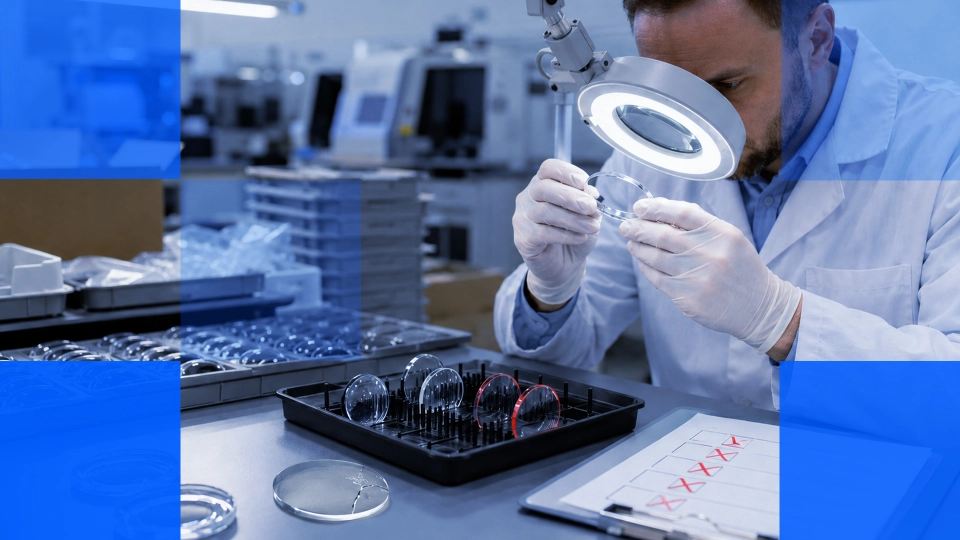
Following strict application protocols and maintaining exacting machine standards is the foundation of high-yield, defect-free coating processes. Labs that consistently achieve premium results typically excel in these areas:

1. Environment & cleanroom control

  • Maintain ISO-certified cleanroom standards with controlled temperature and humidity to prevent static buildup and dust attraction.
  • Use positive air pressure systems to keep contaminants out, with HEPA-filtered airflow across critical coating zones.
  • Enforce full gowning procedures (hairnets, gloves, shoe covers, anti-static clothing, etc) to minimize particle introduction.
  • Regularly audit airflow patterns, particle counts, and cleanroom integrity.

2. Lens preparation & handling

  • Implement multi-stage ultrasonic cleaning with monitored detergent concentration and water quality (deionized water at ≤ 1 µS/cm conductivity).
  • Ensure polishing compound removal through optimized surfactant use and rinse cycles.
  • Verify complete drying before hard coat or AR application to avoid trapped moisture.
  • Use lint-free gloves and tools to handle lenses after final cleaning to prevent recontamination.

3. Coating material management

  • Store hard coat lacquers and AR materials per manufacturer specifications (temperature, light exposure, shelf life).
  • Mix or replenish coating baths only with measured, filtered additions; monitor viscosity, cooling temperature, and solid content.
  • Match lacquer index to the lens substrate index to prevent Newton rings.
  • Replace bath solutions on a preventative schedule rather than reactively to defects.

4. Process control & calibration

  • Calibrate spin speeds, lift-out rates, cure times, and cure temperatures according to the substrate and coating type.
  • In dip coating, control withdrawal (lift-out) speed to get the desired lacquer thickness and maintain uniform thickness.
  • For thermal curing, log oven temperature profiles and verify with calibrated probes; avoid temperature overshoot that can induce yellowing or surface stress.
  • Maintain vacuum chamber parameters (pressure, gas flow, cleaning conditions) for AR and mirror coatings, with real-time monitoring where possible.

5. Layer compatibility checks

  • Confirm all coating layers (hard coat, AR stack, topcoat, mirror) are designed to work together chemically and mechanically.
  • Test adhesion between each layer type in small batches before scaling to full production.

6. Preventive maintenance & quality assurance

  • Schedule regular preventive maintenance for coating lines, including pump seals, filters, bath circulation systems, and UV/thermal curing equipment.
  • Maintain detailed process logs, including lot numbers for coatings and substrates, machine settings, and operator notes.
  • Perform Bayer abrasion tests, adhesion tests, haze measurements, and spectral reflectance checks as part of in-process quality control — not just at final inspection.
  • Track defect trends to identify root causes (environmental, mechanical, or human factors) and implement corrective actions.

By implementing these controls, labs can dramatically reduce rework, extend coating life, and consistently meet premium optical performance standards.

Maximize coating performance with IOT

Superior coating performance isn’t just about equipment. It starts with smart lens design, material compatibility, and consistent process control. That’s why IOT supports labs with technologies that make coating easier, more reliable, and more customizable.

Whether you’re using Neochromes photochromic lenses or Endless Steady progressive designs, IOT’s materials provide excellent adhesion for modern coating stacks. Our lens designs and substrates are developed to support high-yield, high-performance coating applications. IOT partners benefit from:

  • Tailored coating recipes for AR stacks, blue light filters, and mirror coatings

  • Validated compatibility with hard coat, AR, and photochromic treatments for highest performance

  • Access to process control support and and standardized quality control tests in the market (e.g. Bayer abrasion testing, QUV aging, adhesion, haze and spectral reflectance checks)

Whether you’re launching a new mirror series or improving yield on AR stacks, our coating-ready lens platform and technical expertise give our partners a competitive edge in performance and reliability.

Contact us today to find out how we can optimize your coating process together.

You may also like:

  • AI-Powered Lenses Are Here: What This Means for Labs, ECPs, and Patients
  • What Are High-Index Lenses? Benefits & Considerations
  • Understanding Computer Vision Syndrome: A Guide to Choosing Lenses to Manage Digital Eye Strain

Back to Blog

About the Authors

Victor Mayoral Bruno
Process Engineer Manager

Víctor is a Process Engineer Manager at IOT Lenses, with over 20 years of experience in the optical industry. Prior to joining IOT, he led production and maintenance operations at several high-volume ophthalmic labs, including Prats and Essilor, where he managed complex automation systems and teams of up to 45 professionals. Víctor holds a degree in Industrial Engineering and an MBA, and brings deep expertise in quality control, lean manufacturing, and process improvement.

  • Linkedin
Read more

Related items

Lens Errors in Optical Labs: How to Identify & Prevent Costly Mistakes

Lens Errors in Optical Labs: How to Identify & Prevent Costly Mistakes

8 oct 2025 | Victor Mayoral Bruno

5 Types of Lens Coatings: What Labs & ECPs Need to Know

5 Types of Lens Coatings: What Labs & ECPs Need to Know

9 sept 2025 | Victor Mayoral Bruno

Trivex vs. Polycarbonate Lenses: Choosing the Right Material

Trivex vs. Polycarbonate Lenses: Choosing the Right Material

15 oct 2024 | Jordi Xing

Lighter Lenses with IOT Lenticularization

Lighter Lenses with IOT Lenticularization

28 feb 2024 | Deborah Kotob, ABOM

Helping Labs Deliver Excellent Free-Form Lenses

Helping Labs Deliver Excellent Free-Form Lenses

15 nov 2023 | Daniel Crespo

Sobre Nosotros
  • IOT en cifras
  • Los comienzos
  • Nuestro ADN
  • Nuestros cuatro pilares
  • Nuestros valores
CONTÁCTENOS
  • Contacta con ventas
  • Trabaja con nosotros
IOT Intelligence
  • Nuestro ecosistema de innovación
  • Nuestra metodología de innovación
  • IOT Freeform Designer
  • Tecnologías inteligentes
SERVICIOS PARA TU NEGOCIO
  • Full-Service Support
  • La experiencia IOT
  • IOT Business Consulting
  • IOT Technical Services
  • IOT Marketing Services
  • IOT Client Hub
LO QUE HACEMOS
  • Innovación como servicio
  • Nuestras tecnologías
  • Soluciones para la presbicia
  • Soluciones en monofocales
  • Neochromes
  • Myopia management solutions
  • Custom lenses
  • Computer lenses
  • Comparativa de lentes
  • Soluciones
PRODUCTOS DESTACADOS
  • Neochromes with Camber
  • MyoLess
  • Camber Steady Plus Progressive
  • Endless Steady Progressive
  • Essential Steady Progressive
  • Endless Office Ocupational
  • Endless Drive Progressive
  • Endless Sport Progressive
  • Endless Single Vision
  • Endless Anti-fatigue Vision
Materiales
  • Trivex
  • CR-39
  • Policarbonato
  • Alto Índice
Our Brand Sites
  • light-form.com
  • neochromes.com
Política de Cookies Política de privacidad Aviso Legal Política de Seguridad Canal de Denuncias ® Copyright 2026
Follow us on Linkedin Follow us on Facebook Follow us on Youtube Follow us on Instagram
Cookies

¿Aceptas nuestras cookies y política de privacidad?

Tu privacidad es importante para nosotros. Por ello te informamos que utilizamos cookies propias y de terceros para realizar análisis de uso y medición de nuestra página web con el fin de personalizar contenidos, así como proporcionar funcionalidades a las redes sociales o analizar nuestro tráfico. Para continuar acepta o modifica la configuración de nuestras cookies.

Rechazar Configurar cookies Aceptar
Política de Cookies
  • Tu privacidad
  • Cookies estrictamente necesarias
  • Cookies de preferencias o personalización
  • Cookies de análisis o medición
  • Política de Cookies

Tu privacidad es importante para nosotros

Las cookies son pequeños archivos de texto almacenados en tu ordenador cuando visitas nuestra web. Utilizamos cookies para mejorar tu experiencia en nuestro sitio web (por ejemplo, para recordar tu detalles de acceso).

Puedes cambiar tus preferencias y rechazar que algunos tipos de cookies sean almacenados en tu ordenador mientras estás navegando en nuestra web. Puedes cancelar cualquier cookie ya almacenada en tu ordenador, pero recuerda que cancelar los cookies puede impedirte utilizar algunas partes de nuestra web.

Cookies estrictamente necesarias

Estas cookies son esenciales para proveerte los servicios disponibles en nuestra web y para permitirte utilizar algunas características de nuestra web.


Cookies de preferencias o personalización

Estas cookies son utilizadas para ofrecerte una experiencia más personalizada y para recordar tus elecciones en nuestro sitio web.

Por ejemplo, podemos utilizar cookies de funcionalidad para recordar tu preferencias de idioma o tus detalles de acceso.

Cookies de análisis o medición

Estas cookies son utilizadas para recopilar información para analizar el tráfico en nuestra web y la forma en que los usuarios utilizan nuestra web.

Por ejemplo, estas cookies pueden recopilar datos como cuanto tiempo llevas navegado en nuestro sitio web o que páginas visitas, lo que nos ayuda a comprender cómo podemos mejorar nuestra web.

La información recopilada con estas cookies de análisis o medición no identifica a ningún visitante individual.

Política de Cookies

Para cumplir con la Ley 34/2002 de 11 de Julio, de Servicios de la Sociedad de la Información y el Comercio Electrónico (LSSICE), se informa de los siguientes aspectos legales:


PROPIEDAD DEL SITIO WEB

Responsable: INDIZEN OPTICAL TECHNOLOGIES SL - CIF B84465921- (En adelante IOT)
Domicilio social: C/Suero de Quiñones 34-36. 28002, Madrid (Madrid), España
Dirección: C/Suero de Quiñones 34-36. 28002, Madrid (Madrid), España
Contacto: Tel. 91 833 3786 - Email: proteccion_datos@iot.es
Datos de registro: Hoja M387390, folio 134, tomo 21750.
Actividad: Innovación en lentes


INFORMACIÓN Y TERMINOLOGÍAS ¿QUÉ SON LAS COOKIES?

Las cookies son archivos pequeños que las páginas web, tiendas online, intranets, plataformas online o similares, almacenan en el navegador del usuario que las visita y resultan necesarios para aportar a la navegación web innumerables ventajas en la prestación de servicios interactivos.

La siguiente información de los tipos posibles de cookies ayuda a comprender mejor las funciones que hacen posible:

  • Cookies de sesión: son cookies temporales que permanecen en el espacio de cookies de su equipo hasta que cierra el navegador, por lo que ninguna queda registrada en el disco del usuario. La información obtenida por medio de estas cookies sirve para hacer posible la gestión operativa con cada uno de los usuarios que está accediendo de forma simultánea a la web.
  • Cookies persistentes: son cookies que permanecen almacenadas en el espacio de cookies de su equipo una vez cerrado el navegador, y que volverá a consultar dicha página web la próxima vez que acceda a ella para recordar información que facilite la navegación (acceder directamente al servicio sin necesidad de hacer el proceso de login) o la prestación de un servicio comercial (ofrecer aquellos productos o servicios relacionados con anteriores visitas).

Las cookies intercambiadas al navegar por una página web pueden ser:

  • Cookies de origen o propias: son cookies generadas por la propia página web que se está visitando.
  • Cookies de terceros: son cookies que se reciben al navegar por esa página web, pero que han sido generadas por un tercer servicio que se encuentra hospedado en ella. Un ejemplo puede ser la cookie empleada por un anuncio o banner de publicidad que se encuentra en la página web que visitamos. Otro puede ser la cookie empleada por un contador de visitantes contratado por la página web que visitamos.

Las cookies pueden ser usadas para:

  • Fines técnicos: son las denominadas también “estrictamente necesarias”.  Permiten al  usuario  la  navegación a  través de una   página  web, plataforma o aplicación y la utilización de las diferentes opciones o servicios que en ella existan como, por  ejemplo, controlar el tráfico  y la comunicación de datos, identificar  la sesión, acceder a partes de acceso restringido, recordar los  elementos  que integran un pedido, realizar el proceso de compra de un pedido, realizar la solicitud de inscripción o participación en un evento, utilizar elementos de seguridad durante la navegación, almacenar contenidos para la difusión de videos o sonido o compartir contenidos a través de redes sociales.
  • Personalización: hacen posible que cada usuario pueda configurar aspectos como el lenguaje en el que desea ver la página web, formatos de visualización, etc.
  • Análisis o rendimiento: permiten medir el número de visitas y criterios de navegación de diferentes áreas de la web, aplicación o plataforma y nos permite elaborar perfiles de navegación de los usuarios de dichos sitios, aplicaciones y plataformas, con el fin de introducir mejoras en función del análisis de los datos de uso recabados que hacen los usuarios del servicio.
  • Publicidad: permiten implementar parámetros de eficiencia en la publicidad ofrecida en las páginas web.
  • Publicidad comportamental: permiten implementar parámetros de eficiencia en la publicidad ofrecida en las páginas web, basados en información sobre el comportamiento de los usuarios obtenido a través de la observación continuada de sus hábitos de navegación, lo que permite desarrollar un perfil específico para mostrar publicidad en función del mismo.


DETALLE DE COOKIES UTILIZADAS

El sitio Web de IOT utiliza cookies para el correcto funcionamiento y visualización de los sitios Web por parte del usuario, así como la recogida de datos estadísticos y analíticos sobre la navegación de los usuarios. IOT utiliza las siguientes cookies:
 

ANALÍTICAS Google Tag Manager

Descripción:
Estas Cookies recopilan información de tu experiencia de navegación en nuestros portales web de forma totalmente anónima. - Podemos contabilizar el número de visitantes de la página o los contenidos más vistos. 

Usos:

  • Podemos saber si el usuario que está accediendo es nuevo o repite visita.
  • Esa información puede ayudarnos a mejorar la navegación y darte un mejor servicio.


REDES SOCIALES

Descripción:
Las Cookies de redes sociales son utilizadas para unir la web con el perfil en la mencionada red social.

Usos:

  • Puedes hacer uso de este botón para redirigirte al perfil de IOT en LinkedIn, YouTube, Instagram y Facebook.


SERVICIOS DE TERCEROS

Adicionalmente, IOT tiene presencia en portales y servicios de terceros para los que, si desea conocer las condiciones de privacidad y uso de cookies, deberán consultarse las políticas proporcionadas por los mismos:

  • Facebook
  • Linkedin
  • Instagram
  • YouTube


ACEPTACIÓN POLÍTICA DE COOKIES

IOT muestra información sobre su Política de Cookies en la parte inferior de cualquier página del sitio Web con cada inicio de sesión con el objeto de que usted sea consciente.

Ante esta información es posible llevar a cabo las siguientes acciones:

  • Aceptar cookies: No se volverá a visualizar este aviso al acceder a cualquier página del portal durante la presente sesión
  • Rechazar cookies: No se volverá a visualizar este aviso al acceder a cualquier página del portal durante la presente sesión
  • Configuración de las cookies: Podrá obtener más información sobre cómo son las cookies, conocer la Política de Cookies de IOT y modificar la configuración para restringir o bloquear las cookies de IOT en cualquier momento. En el caso de restringir o bloquear las cookies puede ver reducidas las funcionalidades de la Web.


CÓMO MODIFICAR LA CONFIGURACIÓN DE LAS COOKIES

Usted puede restringir, bloquear o borrar las cookies de IOT o cualquier otra página web, utilizando su navegador. En cada navegador la operativa es diferente, la función de "Ayuda" le mostrará cómo hacerlo:

  • Internet Explorer
  • FireFox
  • Chrome
  • Safari
  • Opera


ACTUALIZACIÓN DE LA POLÍTICA DE COOKIES

Es posible que actualicemos la Política de Cookies de IOT, por ello le recomendamos revisar esta política cada vez que acceda a http://www.iotlenses.com con el objetivo de estar adecuadamente informado sobre cómo y para qué usamos las cookies.


Última actualización: 22 de diciembre de 2021