• EN
  • FR
  • ZH
  • DE
  • PT
  • IT
IOT See the difference
  • EN
  • FR
  • ZH
  • DE
  • PT
  • IT
  • Discover our lenses
    • Endless AI (New)
    • Progressive solutions
      • Camber Steady Plus Progressive
      • Endless Steady Progressive
      • Essential Steady Progressive
      • Endless Drive Progressive
      • Endless Sport Progressive
      • Endless Pilot Progressive
    • Occupational solutions
      • Endless Office Occupational
    • Bifocal solutions
      • Endless Bifocal
    • Single vision solutions
      • Endless Single Vision
      • Endless Anti-fatigue Single Vision
      • Endless Drive Single Vision
    • MyoLess
    • Neochromes
      • Neochromes Experience
      • Neochromes
      • Neochromes with Camber Technology
      • Neochromes Dark
      • Instructions for Use
    • Lens comparisons
  • Technologies
    • Camber Technology
    • IOT Digital Ray Path 2 Technology
    • Steady Methodology
    • Steady Plus Methodology
  • Services
    • IOT Business Consulting
    • IOT Technical Services
    • IOT Marketing Services
    • IOT Client Hub
    • IOT Solutions
  • Blog
  • Resource Hub
  • About IOT
    • Our company
    • IOT Intelligence
      • Our innovation ecosystem
      • Our innovation methodology
      • IOT Freeform Designer
      • Intelligent technologies
    • The IOT Experience
    • Innovation as service
    • IOT Events
    • Projects and Collaborations
    • IOT Ethics and Transparency
  • Contact us
    • Contact sales
    • Careers
  • Visit light-form.com
  • Discover our lenses
    • Endless AI (New)
    • Progressive solutions
      • Camber Steady Plus Progressive
      • Endless Steady Progressive
      • Essential Steady Progressive
      • Endless Drive Progressive
      • Endless Sport Progressive
      • Endless Pilot Progressive
    • Occupational solutions
      • Endless Office Occupational
    • Bifocal solutions
      • Endless Bifocal
    • Single vision solutions
      • Endless Single Vision
      • Endless Anti-fatigue Single Vision
      • Endless Drive Single Vision
    • MyoLess
    • Neochromes
      • Neochromes Experience
      • Neochromes
      • Neochromes with Camber Technology
      • Neochromes Dark
      • Instructions for Use
    • Lens comparisons
  • Technologies
    • Camber Technology
    • IOT Digital Ray Path 2 Technology
    • Steady Methodology
    • Steady Plus Methodology
  • Services
    • IOT Business Consulting
    • IOT Technical Services
    • IOT Marketing Services
    • IOT Client Hub
    • IOT Solutions
  • Blog
  • Resource Hub
  • About IOT
    • Our company
    • IOT Intelligence
      • Our innovation ecosystem
      • Our innovation methodology
      • IOT Freeform Designer
      • Intelligent technologies
    • The IOT Experience
    • Innovation as service
    • IOT Events
    • Projects and Collaborations
    • IOT Ethics and Transparency
  • Contact us
    • Contact sales
    • Careers
  • Visit light-form.com

Back to Blog

Detecting Binocular Vision Issues and Managing Them with Prism Correction

Detecting Binocular Vision Issues and Managing Them with Prism Correction

Published 19 nov 2025 | 7 min
Category ECP Tips
Author
Pablo Concepcion-Grande
Clinical Research Associate

  • Understanding binocular vision
  • Heterophoria
  • Heterotropia
  • Common signs of binocular vision dysfunction
  • Detection methods for binocular vision problems
  • 1. Cover test
  • 2. Maddox rod and Maddox wing test
  • 3. Prism bar measurements
  • 4. Near point of convergence (NPC) test
  • 5. Fixation disparity test
  • When to prescribe prism correction
  • Challenges in prescribing and dispensing prism lenses
  • The advantage of free-form digital lenses with prism
  • IOT advances prism lens innovation for binocular vision dysfunction
Detecting Binocular Vision Issues and Managing Them with Prism Correction

Detecting Binocular Vision Issues and Managing Them with Prism Correction

Many people do not notice a subtle increase in blurry vision or a slow appearance of double vision. Yet binocular vision dysfunction (the inability of both eyes to work together to form a single, clear image) affects millions of individuals, often going undetected for years while causing symptoms ranging from subtle eye strain to double vision.

One of the tools available to address binocular dysfunction is prism correction. Modern digital surfacing technology enables laboratories to deliver prism-incorporated free-form lenses that help realign the visual system and reduce strain. Now ECPs can prescribe more complex prism solutions, ensuring patients receive lenses that address both their refractive error and their binocular balance.

Understanding binocular vision

Binocular vision is an aspect of visual processing that, when functioning correctly, allows both eyes to fuse two images into a single, three-dimensional image with accurate depth perception. The accommodative and vergence systems work in constant partnership to maintain this comfortable vision. The system relies on precise alignment, synchronized eye movements, and the brain's ability to fuse images from each eye into a cohesive visual experience.

When issues disrupt binocular vision, it can manifest in two broad categories of misalignment:

Heterophoria

With heterophoria, the eyes have a latent misalignment that is only apparent when an action disrupts binocular vision. This can be when the person is relaxed, closing one or both eyes, or undergoing a cover test. When both eyes are open and functioning, the brain works to fix the misalignment, though the eye muscles constantly strain to do so. 

A compensated heterophoria causes no symptoms because the visual system successfully maintains single binocular vision. When the system becomes stressed—due to factors like prolonged near work, fatigue, illness, or uncorrected refractive error—a previously compensated heterophoria may decompensate, leading to symptoms or even intermittent strabismus.

Heterotropia

Also known as strabismus or a squint, heterotropia occurs when one eye can maintain focus on a point, but the other eye deviates in a different direction. It typically results from a muscular or neuromuscular imbalance, leading to misalignment of the visual axes. Unlike heterophoria, heterotropia is always present and prevents the brain from fusing the two retinal images into a single clear picture, often resulting in double vision or suppression of one image.

There are different kinds of heterotropia: 

  • Esoptropia: An inward deviation of the eyes.
  • Exotropia: An outward deviation of the eyes.
  • Hypotropia: One eye points downward
  • Hypertropia: One eye points upward. 

Common signs of binocular vision dysfunction

Common signs of binocular vision dysfunction

Patients with binocular vision issues often present with complaints that overlap with other visual issues and may seem unrelated to eye alignment problems, which is how binocular vision gets misdiagnosed so often. Symptoms frequently worsen during periods of visual stress, such as extended computer use, reading, or when fatigued.

Common issues caused by binocular vision dysfunction include: 

Visual symptoms

  • Eyestrain
  • Headaches (particularly frontal)
  • Blurred vision
  • Double vision (diplopia) 
  • Text appears to move, jump, or float on the page during reading 

Physical symptoms

  • Motion sickness
  • Dry eyes
  • Dizziness 
  • Pulling sensations around the eyes
  • Burning or tearing eyes
  • Heavy eyelids
  • General fatigue after visual tasks 

Functional symptoms

  • Difficulty reading, skipping lines, or losing place
  • Poor reading comprehension
  • Reduced attention span
  • Slow writing speed

Children with binocular vision dysfunction often avoid homework and near tasks and have academic struggles misattributed to attention deficit disorders. It’s hard to diagnose young children, as they may not realize their visual experience is abnormal and therefore often don't report visual discomfort.

Adults typically present with work-related symptoms due to heavy digital device use and sustained near work.

Detection methods for binocular vision problems

Identifying and addressing binocular vision problems requires a patient to undergo specific tests. Common detection methods include:

1. Cover test

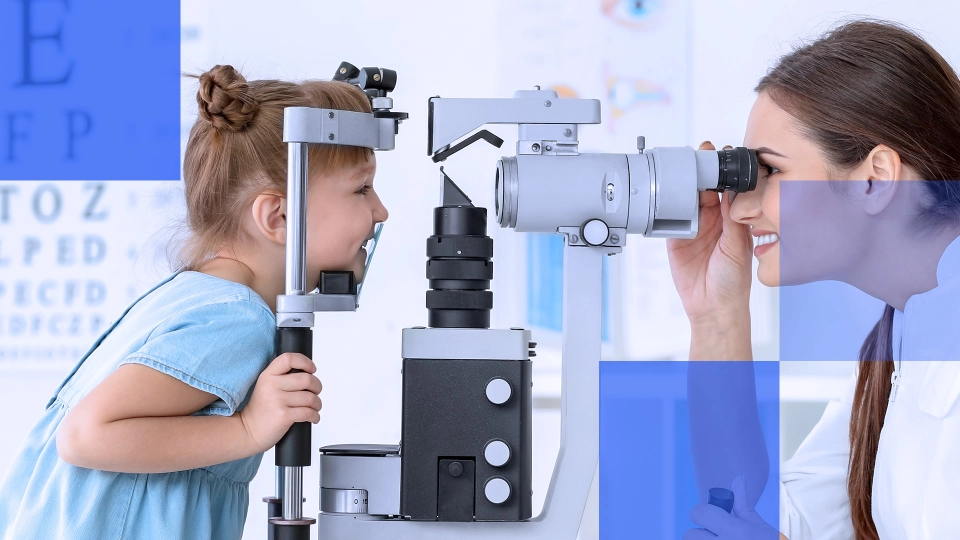
The patient’s eyes are alternately covered and uncovered to reveal phorias or tropias. If the covered eye moves when uncovered, it reveals a phoria. If the eye moves to take up fixation when the “good” eye is covered, then it confirms a tropia.  Proper technique requires using an accommodative target and occluding each eye for at least two seconds to bring about any existing deviation. By the end of testing, the cover test indicates whether there is a phoria and where a tropia may be present. 

2. Maddox rod and Maddox wing test

Both tests are dissociation techniques that highlight misalignment by breaking down binocular fusion. The Maddox rod measures horizontal and vertical phorias (heterophorias) at a far distance by creating dissociation between the eyes while maintaining some binocular cues. This technique is beneficial for detecting minor vertical deviations that might be missed with cover testing alone.

Maddox wing testing measures horizontal, vertical, and torsional heterophorias at a near distance. The wing test can measure this rotational deviation, which the rod test cannot. 

Thorington card test

The Thorington card test is a lesser-used test, employed only in some countries, such as the U.S., Spain, and South Africa. It measures horizontal and vertical phoria by having a patient look through a Maddox rod at a card with a numbered scale and a light behind it. Where the patient reports the location of the Maddox rod’s line on the numbered scale reveals the direction and magnitude of the eye deviation in prism diopters. Its simplicity and repeatability make it a reliable test for measuring changes over time. 

3. Prism bar measurements

Prism bar measurements quantify the degree of deviation in prism diopters. The measurement indicates the strength of the prism required to correct the eye's deviation, which guides treatment decisions. Determining the measurement involves an optometrist observing the eye movement and recording the prism power at the neutralization point. 

4. Near point of convergence (NPC) test

The NPC test measures the closest point at which the eyes can maintain single binocular vision. A receded NPC beyond 10 cm is considered abnormal and often indicates convergence insufficiency. A practitioner should repeat the test several times, as patients with unstable binocular vision may show deterioration with successive measurements.

5. Fixation disparity test

Fixation disparity testing is a routine diagnosis consideration that reveals subtle binocular vision stress that may not be apparent through traditional dissociation tests. When present, fixation disparity indicates that the visual system is working harder than usual to maintain fusion, often predicting future symptoms even when the patient does not have big current complaints. The result reveals disparity in a more natural way and helps refine prism prescriptions. 

When to prescribe prism correction

When to prescribe prism correction

When ECPs identify a binocular misalignment, they may prescribe a prism to assist with the imbalance. Indicators for prism correction in lenses are when the eyes cannot maintain comfortable alignment on their own. This typically occurs when a patient's eye muscles cannot provide enough compensatory effort to overcome their natural misalignment, known as inadequate fusional reserves. Since binocular vision dysfunction symptoms overlap with other visual problems, ECPs should only prescribe prism after thorough testing. 

Patients benefit from prism correction when: 

  • They experience diplopia (double vision) from various causes

  • Convergence insufficiency doesn't improve with eye exercises

  • Surgery is contraindicated

  • Decompensated phorias

  • Tropias / Strabismus

Age plays a crucial role in prism prescription decisions. Younger patients often respond well to vision therapy and may not require permanent prism correction. Older adults, particularly those with presbyopia-related binocular vision changes, may benefit more from prism intervention.

Challenges in prescribing and dispensing prism lenses

While prism is effective, it introduces challenges in both prescribing and manufacturing:

  • Prism accuracy: Even minor errors can cause visual discomfort or worsen symptoms. 
  • Adaptation issues: Patients can experience adaptation issues, specifically with high prism and vertical prism.

Eye care professionals must set realistic expectations with patients. With today’s free-form technology, prism accuracy is highly reliable, but clear communication helps ensure patients understand how their lenses will perform and feel during adaptation.

The advantage of free-form digital lenses with prism

Traditional molded lenses with prism are limited in flexibility. Free-form surfacing, by contrast, treats prism as just another parameter in the digital calculation. This provides:

  • Simplified and flexible prism incorporation: Free-form surfacing technology integrates prism directly into the digital calculation process; just like sphere, cylinder, and addition powers. This makes it easier and more flexible to produce lenses with prism correction while maintaining consistent optical quality across the lens surface.
  • Ability to process complex prescriptions: Free-form design enables the successful combination of significant refractive errors with prism correction, something that was challenging or impossible with conventional lens manufacturing. A patient can have a complex prescription without sacrificing optical performance.
  • Customization: An advanced free-form lens lab can incorporate prism into single vision, wraparound, or occupational lenses with ease. When treated as just another parameter in free-form design, prescriptions become fully customizable. 
  • Aesthetics: Lens appearance benefits significantly from free-form manufacturing. The ability to control surface contours precisely means reduced lens thickness variations and improved cosmetic appearance, which is significant for patients requiring higher prism powers.

For patients, the result is better binocular balance, less strain, and a lens that feels natural. 

IOT advances prism lens innovation for binocular vision dysfunction

IOT can seamlessly incorporate prism into free-form designs, so practitioners can confidently prescribe complex corrections knowing they'll be manufactured accurately and consistently. Adding IOT’s lens designs and algorithms means providing binocular balance across the visual field.

Manufacturers gain reliable processes for complex jobs, reducing remake risk and expanding their service range. IOT also supports slab-offs, high prism prescriptions, and custom lenticularization to maintain lens aesthetics and performance.

By partnering with IOT, ophthalmic lens manufacturers and labs can offer their ECP customers advanced lens designs that expand their treatment capabilities and enhance patient outcomes for binocular vision dysfunction.

If your lab is interested in integrating prism correction lenses into your portfolio, contact us to learn more about IOT’s technology and support.


Back to Blog

About the Authors

Pablo Concepcion-Grande
Clinical Research Associate

Pablo Concepcion-Grande holds a degree in Optics and Optometry, a master’s in optometry and Vision, and a PhD in Optics, Optometry, and Vision from the Complutense University of Madrid. Since 2015, he has been working as a Research Scientist specializing in optical research, specifically in spectacle optics and contributing to the development of innovative ophthalmic lenses and conducting clinical research in the field of ophthalmic optics. His PhD thesis investigated how eye movement patterns are influenced by progressive power lenses using eye-tracking technology.

  • Linkedin
Read more

Related items

How to Address Light Discomfort & Sensitivity with Intelligent Lens Solutions

How to Address Light Discomfort & Sensitivity with Intelligent Lens Solutions

2 feb 2026 | Amelia Gonzalez

How Vertex Distance, Pantoscopic Tilt, and Wrap Angle Affect Prescription Accuracy

How Vertex Distance, Pantoscopic Tilt, and Wrap Angle Affect Prescription Accuracy

3 dic 2025 | Eluned "Lil" Creighton-Sims

Detecting Binocular Vision Issues and Managing Them with Prism Correction

Detecting Binocular Vision Issues and Managing Them with Prism Correction

19 nov 2025 | Pablo Concepcion-Grande

Add Power by Age: A Guide to Understanding Presbyopic Prescription Changes

Add Power by Age: A Guide to Understanding Presbyopic Prescription Changes

5 ago 2025 | Eluned "Lil" Creighton-Sims

Understanding Computer Vision Syndrome: A Guide to Choosing Lenses to Manage Digital Eye Strain

Understanding Computer Vision Syndrome: A Guide to Choosing Lenses to Manage Digital Eye Strain

14 abr 2025 | Eluned "Lil" Creighton-Sims

What is Myopia and Can Glasses Correct It?

What is Myopia and Can Glasses Correct It?

21 ago 2024 | Clara Benedí García

Sobre Nosotros
  • IOT en cifras
  • Los comienzos
  • Nuestro ADN
  • Nuestros cuatro pilares
  • Nuestros valores
CONTÁCTENOS
  • Contacta con ventas
  • Trabaja con nosotros
IOT Intelligence
  • Nuestro ecosistema de innovación
  • Nuestra metodología de innovación
  • IOT Freeform Designer
  • Tecnologías inteligentes
SERVICIOS PARA TU NEGOCIO
  • Full-Service Support
  • La experiencia IOT
  • IOT Business Consulting
  • IOT Technical Services
  • IOT Marketing Services
  • IOT Client Hub
LO QUE HACEMOS
  • Innovación como servicio
  • Nuestras tecnologías
  • Soluciones para la presbicia
  • Soluciones en monofocales
  • Neochromes
  • Myopia management solutions
  • Custom lenses
  • Computer lenses
  • Comparativa de lentes
  • Soluciones
PRODUCTOS DESTACADOS
  • Neochromes with Camber
  • MyoLess
  • Camber Steady Plus Progressive
  • Endless Steady Progressive
  • Essential Steady Progressive
  • Endless Office Ocupational
  • Endless Drive Progressive
  • Endless Sport Progressive
  • Endless Single Vision
  • Endless Anti-fatigue Vision
Materiales
  • Trivex
  • CR-39
  • Policarbonato
  • Alto Índice
Our Brand Sites
  • light-form.com
  • neochromes.com
Política de Cookies Política de privacidad Aviso Legal Política de Seguridad Canal de Denuncias ® Copyright 2026
Follow us on Linkedin Follow us on Facebook Follow us on Youtube Follow us on Instagram
Cookies

¿Aceptas nuestras cookies y política de privacidad?

Tu privacidad es importante para nosotros. Por ello te informamos que utilizamos cookies propias y de terceros para realizar análisis de uso y medición de nuestra página web con el fin de personalizar contenidos, así como proporcionar funcionalidades a las redes sociales o analizar nuestro tráfico. Para continuar acepta o modifica la configuración de nuestras cookies.

Rechazar Configurar cookies Aceptar
Política de Cookies
  • Tu privacidad
  • Cookies estrictamente necesarias
  • Cookies de preferencias o personalización
  • Cookies de análisis o medición
  • Política de Cookies

Tu privacidad es importante para nosotros

Las cookies son pequeños archivos de texto almacenados en tu ordenador cuando visitas nuestra web. Utilizamos cookies para mejorar tu experiencia en nuestro sitio web (por ejemplo, para recordar tu detalles de acceso).

Puedes cambiar tus preferencias y rechazar que algunos tipos de cookies sean almacenados en tu ordenador mientras estás navegando en nuestra web. Puedes cancelar cualquier cookie ya almacenada en tu ordenador, pero recuerda que cancelar los cookies puede impedirte utilizar algunas partes de nuestra web.

Cookies estrictamente necesarias

Estas cookies son esenciales para proveerte los servicios disponibles en nuestra web y para permitirte utilizar algunas características de nuestra web.


Cookies de preferencias o personalización

Estas cookies son utilizadas para ofrecerte una experiencia más personalizada y para recordar tus elecciones en nuestro sitio web.

Por ejemplo, podemos utilizar cookies de funcionalidad para recordar tu preferencias de idioma o tus detalles de acceso.

Cookies de análisis o medición

Estas cookies son utilizadas para recopilar información para analizar el tráfico en nuestra web y la forma en que los usuarios utilizan nuestra web.

Por ejemplo, estas cookies pueden recopilar datos como cuanto tiempo llevas navegado en nuestro sitio web o que páginas visitas, lo que nos ayuda a comprender cómo podemos mejorar nuestra web.

La información recopilada con estas cookies de análisis o medición no identifica a ningún visitante individual.

Política de Cookies

Para cumplir con la Ley 34/2002 de 11 de Julio, de Servicios de la Sociedad de la Información y el Comercio Electrónico (LSSICE), se informa de los siguientes aspectos legales:


PROPIEDAD DEL SITIO WEB

Responsable: INDIZEN OPTICAL TECHNOLOGIES SL - CIF B84465921- (En adelante IOT)
Domicilio social: C/Suero de Quiñones 34-36. 28002, Madrid (Madrid), España
Dirección: C/Suero de Quiñones 34-36. 28002, Madrid (Madrid), España
Contacto: Tel. 91 833 3786 - Email: proteccion_datos@iot.es
Datos de registro: Hoja M387390, folio 134, tomo 21750.
Actividad: Innovación en lentes


INFORMACIÓN Y TERMINOLOGÍAS ¿QUÉ SON LAS COOKIES?

Las cookies son archivos pequeños que las páginas web, tiendas online, intranets, plataformas online o similares, almacenan en el navegador del usuario que las visita y resultan necesarios para aportar a la navegación web innumerables ventajas en la prestación de servicios interactivos.

La siguiente información de los tipos posibles de cookies ayuda a comprender mejor las funciones que hacen posible:

  • Cookies de sesión: son cookies temporales que permanecen en el espacio de cookies de su equipo hasta que cierra el navegador, por lo que ninguna queda registrada en el disco del usuario. La información obtenida por medio de estas cookies sirve para hacer posible la gestión operativa con cada uno de los usuarios que está accediendo de forma simultánea a la web.
  • Cookies persistentes: son cookies que permanecen almacenadas en el espacio de cookies de su equipo una vez cerrado el navegador, y que volverá a consultar dicha página web la próxima vez que acceda a ella para recordar información que facilite la navegación (acceder directamente al servicio sin necesidad de hacer el proceso de login) o la prestación de un servicio comercial (ofrecer aquellos productos o servicios relacionados con anteriores visitas).

Las cookies intercambiadas al navegar por una página web pueden ser:

  • Cookies de origen o propias: son cookies generadas por la propia página web que se está visitando.
  • Cookies de terceros: son cookies que se reciben al navegar por esa página web, pero que han sido generadas por un tercer servicio que se encuentra hospedado en ella. Un ejemplo puede ser la cookie empleada por un anuncio o banner de publicidad que se encuentra en la página web que visitamos. Otro puede ser la cookie empleada por un contador de visitantes contratado por la página web que visitamos.

Las cookies pueden ser usadas para:

  • Fines técnicos: son las denominadas también “estrictamente necesarias”.  Permiten al  usuario  la  navegación a  través de una   página  web, plataforma o aplicación y la utilización de las diferentes opciones o servicios que en ella existan como, por  ejemplo, controlar el tráfico  y la comunicación de datos, identificar  la sesión, acceder a partes de acceso restringido, recordar los  elementos  que integran un pedido, realizar el proceso de compra de un pedido, realizar la solicitud de inscripción o participación en un evento, utilizar elementos de seguridad durante la navegación, almacenar contenidos para la difusión de videos o sonido o compartir contenidos a través de redes sociales.
  • Personalización: hacen posible que cada usuario pueda configurar aspectos como el lenguaje en el que desea ver la página web, formatos de visualización, etc.
  • Análisis o rendimiento: permiten medir el número de visitas y criterios de navegación de diferentes áreas de la web, aplicación o plataforma y nos permite elaborar perfiles de navegación de los usuarios de dichos sitios, aplicaciones y plataformas, con el fin de introducir mejoras en función del análisis de los datos de uso recabados que hacen los usuarios del servicio.
  • Publicidad: permiten implementar parámetros de eficiencia en la publicidad ofrecida en las páginas web.
  • Publicidad comportamental: permiten implementar parámetros de eficiencia en la publicidad ofrecida en las páginas web, basados en información sobre el comportamiento de los usuarios obtenido a través de la observación continuada de sus hábitos de navegación, lo que permite desarrollar un perfil específico para mostrar publicidad en función del mismo.


DETALLE DE COOKIES UTILIZADAS

El sitio Web de IOT utiliza cookies para el correcto funcionamiento y visualización de los sitios Web por parte del usuario, así como la recogida de datos estadísticos y analíticos sobre la navegación de los usuarios. IOT utiliza las siguientes cookies:
 

ANALÍTICAS Google Tag Manager

Descripción:
Estas Cookies recopilan información de tu experiencia de navegación en nuestros portales web de forma totalmente anónima. - Podemos contabilizar el número de visitantes de la página o los contenidos más vistos. 

Usos:

  • Podemos saber si el usuario que está accediendo es nuevo o repite visita.
  • Esa información puede ayudarnos a mejorar la navegación y darte un mejor servicio.


REDES SOCIALES

Descripción:
Las Cookies de redes sociales son utilizadas para unir la web con el perfil en la mencionada red social.

Usos:

  • Puedes hacer uso de este botón para redirigirte al perfil de IOT en LinkedIn, YouTube, Instagram y Facebook.


SERVICIOS DE TERCEROS

Adicionalmente, IOT tiene presencia en portales y servicios de terceros para los que, si desea conocer las condiciones de privacidad y uso de cookies, deberán consultarse las políticas proporcionadas por los mismos:

  • Facebook
  • Linkedin
  • Instagram
  • YouTube


ACEPTACIÓN POLÍTICA DE COOKIES

IOT muestra información sobre su Política de Cookies en la parte inferior de cualquier página del sitio Web con cada inicio de sesión con el objeto de que usted sea consciente.

Ante esta información es posible llevar a cabo las siguientes acciones:

  • Aceptar cookies: No se volverá a visualizar este aviso al acceder a cualquier página del portal durante la presente sesión
  • Rechazar cookies: No se volverá a visualizar este aviso al acceder a cualquier página del portal durante la presente sesión
  • Configuración de las cookies: Podrá obtener más información sobre cómo son las cookies, conocer la Política de Cookies de IOT y modificar la configuración para restringir o bloquear las cookies de IOT en cualquier momento. En el caso de restringir o bloquear las cookies puede ver reducidas las funcionalidades de la Web.


CÓMO MODIFICAR LA CONFIGURACIÓN DE LAS COOKIES

Usted puede restringir, bloquear o borrar las cookies de IOT o cualquier otra página web, utilizando su navegador. En cada navegador la operativa es diferente, la función de "Ayuda" le mostrará cómo hacerlo:

  • Internet Explorer
  • FireFox
  • Chrome
  • Safari
  • Opera


ACTUALIZACIÓN DE LA POLÍTICA DE COOKIES

Es posible que actualicemos la Política de Cookies de IOT, por ello le recomendamos revisar esta política cada vez que acceda a http://www.iotlenses.com con el objetivo de estar adecuadamente informado sobre cómo y para qué usamos las cookies.


Última actualización: 22 de diciembre de 2021